Top 50 Jazz Blog

Top 50 Jazz Blog

Friday, February 26, 2016

Jazz From Argo and ABC Paramount


A lot of jazz would not have been recorded if left to the "majors" (Blue Note, Verve, Columbia, Atlantic). That's where "off" jazz labels like Argo and ABC Paramount stepped in and took care of business. I featured their music on the Duplex Mystery Jazz Hour on WZBC, 2.25.16


LISTEN HERE

PLAYLIST

"Excerpt From the Blues" from Happy Moods 1960  Ahmad Jamal (p), Israel Crosby (b), Vernell Fournier (dms).

Jackie/Roy "Walkin'" from Bits and Pieces  1957 ABC Paramount

"Five spot After Dark" from Meet the Jazztet-Art Farmer – trumpet Benny Golson – tenor saxophone, Curtis Fuller – tromboneMcCoy Tyner – piano Addison Farmer – bass, Lex Humphries – drums

Jimmy Raney "Last Night When We Were Young" from In 3 Attitudes 1957 on ABC Paramount

Lorenz Alexander "Trouble in Mind" from Sing no Sad Songs For Me 1961) ARGO

Don Elliott "I'm beginning to see the light" from "The Voices of Don Elliott" 1957)on ABC Paramount

Al Grey "Rompin" 45 rpm release 1961 on ARGO

Oscar Pettiford Orchestra "Speculation" from "Oscar Pettiford Orchestra in Hi-Fi" 1957 on ABC Paramount

"Time" from "Take a Number From 1 to 10. 1961, Benny Golson Octet/Nonet/Tentet Nick Travis (trumpet) Bill Elton (trombone) Willie Ruff (French horn) Hal McKusick (alto saxophone) Benny Golson (tenor saxophone) Sol Schlinger (baritone saxophone) Tommy Williams (bass) Albert Heath (drums)

Double Six oF Paris, "Stockholm Sweetnin'" 1961 on Phillips

Quincy Jones "Stockholm Sweetnin'" from This Is How I Feel About Jazz 1957 on ABC Paramount

The Call from Introducing Roland Kirk, 1961. Roland Kirk: tenor saxophone, manzello, whistle, stritch, Ira Sullivan: trumpet, tenor saxophone William Burton: organ, piano Donald Garrett: bass Sonny Brown: drums

Zoot Sims "Quicker Blues" from "Zoot Sims Plays 4 altos"1957 ABC Paramount

Vinnie Burke's String Jazz Quartet "A Night in Tunisia" from "Vinnie Burke's String Jazz Quartet" 1957 on ABC Paramount


Friday, February 19, 2016

Recorded in New Orleans in the 1920's

Celestin's Original Tuxedo Jazz Orchestra
New Orleans Owls

THE DUPLEX MYSTERY JAZZ HOUR of
2/18/16 features music recorded in New Orleans in the 1920's. People might not recognize many of the names of the players, but they were grounded in the same musical atmosphere and in some cases, were the teachers of the people whose names we know so well-Jelly Roll Morton, King Oliver, Louis Armstrong,  Kid Ory, Jimmy Noone and others who left New Orleans in the teens and early twenties.


No doubt, there were many reasons why musicians stayed in the Crescent City. Some were content to teach, not interested in travel and separation from family, lacked the confidence to think they could make it "out there," or were temperamentally better suited to being a bigger fish in a smaller pond.

In listening to the music of those who stayed behind, I hear the main stylistic traits that others carried to the West Coast, Chicago, NY and other cities. For the most part, the players aren't pushing through musical barriers, but the N.O. feeling is there.

LISTEN HERE


PLAYLIST
Original Tuxedo Jazz Orchestra “Black Rag” (1925)

Celestin's Original Tuxedo Jazz Orchestra “It's Jam Up”  (1927)

Armand J. Piron's New Orleans Orch “Red Man's Blues” 1925)

John Hyman's Bayou Stompers “Alligator blues” (1927)

Armand J. Piron's New Orleans Orch “Bouncing Around” (1923)

Johnny Miller's New Orleans Frolickers “Panama”  (1928)

Armand J. Piron's New Orleans Orch “Kiss Me Sweet”  (1923)

Monk Hazel & His Bienville Roof Orchestra “Sizzlin' the Blues”

Johnny Bayersdorffer & Jazzola Novelty Orchestra “The Waffle Man's Call”  (1924)

Jones And Collins Astoria Hot Eight “Damp Weather” (1929)

Louis Dumaine's Jazzola Eight “Franklin Street Blues” (1927)

Jones And Collins Astoria Hot Eight “Duet Stomp”  (1929)

Louis Dumaine's Jazzola Eight “To-Wa-Bac-A-Wa”  (1927)

Johnny DeDroit And His New Orleans Orchestra “New Orleans blues” (1923)

Albert Brunies & The Halfway House Orchestra “Maple leaf rag” (1925)

Anthony Parenti & His Famous Melody Boys “Creole Blues” (1925)

Fate Marable's Society Syncopators “Frankie and Johnny” ( 1924)

Tuesday, February 16, 2016

You ARE What You PLAY?


Whew. A non-academic book about jazz that references Rimbaud, Schopenhauer, Brahms, Proust, Faure...Larry Kart, author of Jazz in Search of Itself is not interested in dumbing down. I like that. I also like the interviews, the history he lays down and the scope of the music he talks about. And yet...

The 
philosophical foundation of the book is that jazz is a medium for storytelling and it must be the story of the player-nothing second hand (revivalist) allowed. Kart believes that the capacity of jazz to deliver music completely reflective of its practitioner is what marks it as unique and is the touchstone for assessing the player's contribution. Fair enough. But he takes it a step further.


"We love Ben Webster and Don Byas, Buck Clayton and Bobby Hackett, not just because their music was beautiful in the abstract sense, but also because it told their [his emphasis] stories, revealing something essential about the kind of men they were."

"From the time he made his first recordings...Stan Getz has been writing an autobiography in sound...And the path traced by this sonic quest may be the best evidence we have of who Stan Getz was and is."


"I have never met Lee Morgan, but I would be surprised if he were not a witty, sarcastic, playful man."


His idee fixe simmering in the background makes Kart overreach in his analyses. He wants to both quantify and personify the playing and the jackets he tries to put on musicians fit too tightly. 

Yes, Sonny Rollins often provides his own commentary in a meta way, but can you say "No statement is allowed to rest unqualified by [Rollins] for more than a few measures..."? 

Were Hank Mobley's decisions "always ad hoc.. "? Will Mobley truly "not sum up his harmonic, rhythmic and timbral virtues and allow any one element to dominate for long"? 


Perhaps Tina Brooks did have an "airy, keening, often speechlike approach to the horn," but is it true that it "instantly identified Brooks as one of those musicians for whom feeling and sound were one."[Are there musicians for whom it is separate?] And yes, perhaps his playing was sometimes "melancholic," but it's hard for me to buy that it "seems to have predicted that [his] time with us would be brief." 


Is there a linkage between the "emotional language" and the person using or creating it? Well, yes, but in the same general sense that you are what you eat. But, to the degree that an improvised performance reflects life, it must reflect changing moods and circumstances. There's something self-contradictory about thinking that the music is the man and then trying to capture it in freeze frame-like characterizations. I can find ample playing by Rollins that is simply straightforward, plenty of Mobley solos with something other than ad hoc decisions and moments in Tina Brooks' playing that demonstrate a carefree joie de vivre.

This may represent an inherent limitation of criticism. You can describe the playing, you can quote and give your impressions of the player, but to overdraw comparisons between the player and the playing is, in the end, reductionist.

All of this said, mark me down as an admirer of Larry Kart. Unlike many jazz writers, he listens hard, takes risks and when he hits the mark, it's great stuff. I just think he wants to be a little too much of a myth-maker.

Friday, February 5, 2016

Carmell Jones Radio Show

Trumpeter Carmell Jones, featured on the Duplex Mystery Jazz Hour, WZBC, with Steve Provizer 02/04/2016 05:00PM to 06:00PM


Carmell Jones Quartet "If I Love Again" from "Carmell Jones Quartet" (1960), Fresh Sounds 

Carmell Jones Quartet "Willow Weep for Me" from "Carmell Jones Quartet" (1960), Fresh Sounds 

Bud Shank Quintet featuring Carmel Jones "New Groove" from "New Groove" (1961), Pacific Jazz 

Vi Redd "Now's The Time" from "Bird Call" (1962), United Artists 

Curtis Amy w. Carmell Jones "Groovin' Blue" from "Groovin' Blue" (1961), Pacific Jazz 

Harold Land Quintet "Kisses Sweeter Than Wine" from "Jazz Impressions Of Folk Music" (1963), Imperial 

Horace Silver Quintet "Song for My Father" from "Song for my Father" (1964), Blue Note 

Carmell Jones Quintet "Just In Time" from "Jayhawk Talk" (1965), Prestige 

Nathan Davis w. Carmell Jones " Carmell´s Black Forest Waltz" from "The Hip Walk" (1965), SABA 

Friday, January 29, 2016

Mark Harvey On The Duplex

I had an interesting session with trumpeter, pianist, composer, arranger, minister, writer, educator Mark Harvey on the 1/28/16 Duplex Mystery Radio Hour on WZBC. Check out Mark's book and CD here

Listen to the show HERE


Woody Herman "Mo-Lasses" from "The Swinginest" (1963) on Phillips 

Charlie Parker "Cool Blues" from "Charlie Parker at Storyville" (1988) on Blue Note 

George Russell "War Gewesen" from "George Russell/7 Classic Albums" on Real Gone Jazz 

George Russell "War Gewesen" from "George Russell/So What" (1987) on Blue Note 

The Mark Harvey Group "Tarot: The Moon" from "The Boston Creative Jazz Scene 1970-1983" (2016) on Cultures of Soul 

Thing "Road Through the Wall Pts 2,3" from "The Boston Creative Jazz Scene 1970-1983" (2016) on Cultures of Soul 

Stanton Davis/Ghetto Mysticism "Play Sleep" from "The Boston Creative Jazz Scene 1970-1983" (2016) on Cultures of Soul 


Baird Hersey and the Year of the Ear "Herds and Hoards" from "Herds and Hoards" (2016) on Cultures of Soul 

Friday, January 15, 2016

Herman's First Herd Radio Show


On the Duplex Mystery Jazz Hour, wzbc.org, 90.3 fm,  01/14/2016, we heard music from Woody Herman's First Herd. Great soloists include, Bill Harris, Flip Phillips, Pete Candoli, Margie Hyams, Dave Tough, Red Norvo, Shorty Rogers, with vocals by Woody and Francis Wayne.


PLAYLIST

Woody Herman and The First Herd "Apple Honey" (Jazz, 1945) on Columbia 

Woody Herman and The First Herd "Let it Snow" (Jazz, 1945) on Columbia 

Woody Herman and The First Herd "Laura" (Jazz, 1945) on Columbia 

Woody Herman and The First Herd "Back Talk" (Jazz, 1946) on Columbia 

Woody Herman and The First Herd "Caledonia"  (Jazz, 1945) on Columbia 

Woody Herman and The First Herd "Sidewalks of Cuba" Jazz, 1946) on Columbia 

Woody Herman and The First Herd "Happiness Is Just a Thing Called Joe" (1942) on Columbia 

Woody Herman and The First Herd "Fan It" (Jazz, 1946) on Columbia 

Woody Herman and The First Herd "Goosey Gander" (Jazz, 1945) on Columbia 

Woody Herman and The First Herd "Non Alcoholic" (Jazz, 1946) on Columbia 

Woody Herman and The First Herd "I Wonder" Jazz, 1945) on Columbia 

Woody Herman and The First Herd "Lady Mcgowan's Dream (Pt. I & II)" (Jazz, 1946) on Columbia 

Woody Herman and The First Herd "Northwest Passage" (Jazz, 1945) on Columbia 

Woody Herman and The First Herd "Summer Sequence, pts 1-2"  (Jazz, 1946) on Columbia 


Woody Herman and The First Herd "Woodchopper's Ball" (Jazz, 1946) on Columbia 

Tuesday, January 5, 2016

Jazz Re-Shaping Standards

Without jazz, would "standards" be standards? Fact is, jazz musicians took-and continue to take-a body of music rooted in late 19th and early 20th century musical conventions and re-conceive, rejuvenate and adapt them to changing aesthetics. 

I originally took this up in this post, showing how jazz made All The Things You Are a standard. I ran across an interesting website, www.jazzstandards.com, and I'm going to use the vast amount of data they've compiled about jazz standards to expand the concept.

According to that site, these are the top ten most recorded tunes in the jazz canon, along with the year of their composition. [Notice these are all 30's and 40's tunes. In fact, in the top 300, there are only a handful that were written after 1950-but that's another story]. To keep the length of the post down, I'll take the first five of these tunes and post the earliest recordings I can find in the original context and compare them with the earliest versions I can find in the jazz context. 

1. 1930 Body and Soul
2. 1939 All the Things You Are
3. 1935 Summertime
4. 1944 Round Midnight
5. 1935 I Can't Get Started

6. 1937 My FunnyValentine
7. 1942 Lover Man
8. 1930 What Is This Thing Called Love
9. 1933 Yesterdays
10.1946 Stella By Starlight


Body and Soul, written by Johnny Green for Gertrude Lawrence, was recorded by Helen Morgan in the same year it was written. The vocal has a rubato, recitatif quality to it, with plenty of vibrato. It fits comfortably in the stylistic parameters of the era; post-parlor music, with a bit of art song harmony and the heightened emotion of European cabaret. Morgan does the verse (the first section of the song before the chorus), which most jazz versions don't include; unfortunate, from my perspective. 


Louis Armstrong also recorded Body and Soul in 1930. Right away we have the parallel universe of jazz made manifest. The Armstrong version is clearly a dance record, with a steady swing rhythm section. He approaches the tune with some measure of emotional commitment, but he completely displaces the melody rhythmically and his rendition, both vocally and on his horn, opens onto a different world than that represented by Morgan's version.

Saturday, January 2, 2016

Taking The Plunge


The Duplex Mystery Jazz Hour of 12/31/2015 featured some of the great plunger mute players in jazz.


PLAYLIST

Johnny Dunn's Original Jazz Hounds "Hawaiian Blues" 1922 on Vocalion 

Johnny Dunn and His Band "What's the Use of Being Alone" 1928 on Vocalion 

King Oliver & His Dixie Syncopators "Wa Wa Wa" 1926 on Brunswick 

King Oliver & His Dixie Syncopators "Sugar Foot Stomp" 1926 on Brunswick 

Charles Johnson's Paradise Ten "The Boy in the Boat" 1928 on Victor 

Duke Ellington & His Orchestra "The Mooche" 1928 

Duke Ellington & His Orchestra "Black and Tan Fantasy" on Brunswick 1927

Duke Ellington & His Orchestra "Concerto for Cootie" on Victor 1940 

Hank Jones - Tyree Glenn Sextet "Lonely Moments" 195) 

Clark Terry, Quentin Jackson "Ol'zulu" from  Paris 1960 on Swing 

Al Grey "Nothing but the Truth" from "Snap Your Fingers"  1962 on ARGO 

Clark Terry & His Jolly Giants "Never" from "Clark Terry & His Jolly Giants" 1975) on Vanguard Records 

Rex and Cootie "I'm Beginning to See the Light" from "The Big Challenge" 1957) on Jazztone 

Duke Ellington "It Don't Mean A Thing" 1943 Film 

Friday, December 18, 2015

Muslim Jazz Show

Abdal Karim-Billy Higgins

At this historical juncture in the U.S., it's not a bad thing to recognize the great music contributed by American members of the Muslim faith. Recorded from the Duplex Mystery Jazz Hour program of 12.17.15.

LISTEN HERE

Kenny Dorham "The Prophet" from "Cafe Bohemia VOl 2" 1956 on Blue Note 

Thelonius Monk "In Walked Bud" from "In Walked Bud" 1947 on Jazz Forever 

Dakota Staton "The Late, Late Show" from "The Late, Late Show" 1957 on Capital 

Dexter Gordon "Broadway" from "Our Man in Paris" 1963 on Blue Note 

Ornette Coleman "Ramblin'" from "Change of the Century" 1960 on Atlantic 

Yusef Lateef "I'm just a lucky so and so" from "The Three Faces of Yusef Lateef" 1962 on Compulsion 

Abbey Lincoln "Throw it Away" from "A Turtle's Dream" 1995 on Verve 

Muhal Richard Abrams "Afrisong" from "Afrisong" 2009 on Candid 

Curtis Fuller & Hampton Hawes "A-Drift" from "With French Horns - EP" 957 on Prestige 

Charlie Parker "Little Willie Leaps" from "At Birdland Vol 1" 1950 on Ember


Please let me know if you have trouble accessing the file. The Cloud has its own logic and you may have to use an app to play it.

Friday, November 20, 2015

Remembering Chris Rich

Chris Rich was the guy who started this blog. His first post was on 7/18/09. His posts concentrated on musicians like Matthew Shipp, Bill Dixon and George Russell, whom he thought deserved wider recognition and on free jazz in general. His intelligence was palpable and his profane articulateness, his ability to find the right word and put it in arresting context, was startling. No surprise that his writing was insightful, powerful and pulled no punches. 

In 2010, he invited me to post and soon after asked me to take over the blog. I tried to get him to stay, but there was a lot of fucked up troll activity and I think he just got tired of it. When Chris left the blog, he took on this troll behind the scenes, in a long-term grudge match. He chased him around the globe, trying to flush him out and get him, if not arrested, then at least banned. I think he got partial satisfaction on that.

He was a squarish, solid guy, who apparently came from what has been referred to as "good stock;" at least, he referenced ancestors who settled in Yankee redoubts around Massachusetts. He walked ungodly distances and his robust physical presence made him seem like someone who'd be around for a hundred years, but his ingestion of various substances made you suspect that his time here might be shortened.

Chris was a kind of gatekeeper/factotum/contractor at Prof. Chalfen's 186. His digs there were spartan-a mattress, some shelves of cd's and books, ashtrays and tins with pot and tobacco and his computer. He relished the nocturnal accumulation and parsing of data, putting his face inches from the computer screen and extracting information that was invisible to me and probably to you.

He tried hard to help me get a gig when I sorely needed one and hooked me up with the people at AllAboutJazz.com

He was a complicated cat and I didn't quite "get" him. I had heard him turn on people and become an enemy you didn't want and I suspected that with a bit of miscommunication, this might happen with me, so I distanced myself. I missed hanging with him, but had enough drama in my life and wanted to avoid any more.

So, I only saw him occasionally in the last few years and what I know about him during that time is limited to what someone else told me. I retain a strong vision of this very vivid person, but mine is an impressionistic view of the man. I invite readers to contribute their own stories and help flesh out the story of the sui generis Christopher Rich, who died last week. 


Friday, October 16, 2015

AUTUMN AND BALLADS

It's fall. Linger in the splendors of maple, ash and birch. It may help you infuse winter's stark chiaroscuro with some warmth. For those who are not graced with a vista of changing foliage, I've interspersed a few samples.
Ella


Sinatra


Friday, October 2, 2015

Playboy Jazz Radio Show

Hef and Armstrong
This program, broadcast on 10.1.15, features music associated with Playboy, either recorded for their record label, or played at Playboy Jazz festivals. Founder Hugh Hefner made jazz an important part of the "playboy lifestyle" when he founded the magazine in 1954. Playboy started a Jazz Poll in 1957 and held their first Jazz festival in Chicago in 1959.

LISTEN HERE


PLAYLIST
Oscar Peterson "The Golden Striker" from "Playboy Jazz Allstars," 1959) on PB

Maynard Ferguson "Portuguese Love" from "Playboy Jazz Festival" 1982

Curtis Stigers "My Foolish Heart" from "Playboy Jazz After Dark Vol II" 2005) on PB

Dizzy Gilespie "Wheatleigh Hall" from "Playboy Jazz Allstars," 1959) on PB

The Great Quartet ‬ "‪Inner Glimpse‬" from "‪Playboy Jazz Festival, 1982‬"

Weather Report‬ "‪Volcano For Hire" from "Playboy Jazz Festival‬," 1982)

Milt Jackson "Bag's New Groove" from "Playboy Jazz Allstars," 1959) on PB

Joe Pass & Ella Fitzgerald "I Didn't Know About You" from "Playboy Jazz After Dark vol 2" 2005) on PB

Gerry Mulligan "Gee Baby - Ain't I Good to You" from "Playboy Jazz Allstars," 1959 on PB

Cy Coleman "Playboy's Theme" from "Playboy Jazz Allstars," 1959 on PB

Lambert, Hendricks and Ross and Joe WIlliams, "Everyday I Have the Blues," 1960 on Playboy After Dark

Wednesday, September 16, 2015

Playboy Swings

I just read an advanced copy of Playboy Swings by Patty Farmer. There's a quality of flackdom about the book-lots of exclamation marks and boosting going on here by Ms. Farmer, but while it reads almost like an in-house publication, there is enough solid information in the book to make a person seriously evaluate the relationship between the Playboy empire and jazz between 1955-1975.

Hefner was a jazz fan, as were the other hipster-swinger-ad-men who shaped Playboy. This meant that they would use jazz-and not rock and roll or pop music-as sound track for the lifestyle mythology they were creating first in the magazine and later, on television, in the clubs and resorts. The first interviewer for the magazine was Alex Haley and his first subject was Miles Davis. The Playboy Jazz Poll started in 1957 and their first Jazz Festival was in 1959. They would soon team up with George Wein for future festivals. For many years, these festivals and venues provided nice gigs for the upper echelon of jazz musicians.
The book places a lot of emphasis on the matrix of clubs as a training ground for future stars, which it was-singers and comedians, primarily. What was interesting to me, though, was that the clubs and resorts were a tremendous source of employment for thousands of non-star musicians and comics who did not become household names, but were able to earn a good living; first doing the Playboy circuit, then playing larger rooms as a result of their experience on that circuit. Many of these guys (yes, the musicians and comedians were almost all guys) were playing in strip clubs and other assorted dives when they got the call from Playboy. That's where they would probably have remained had they not been hired for the clubs, where they enjoyed a significant upgrade in quality of venue and in pay. At its height, Playboy was the largest employer of talent in the country.

Hefner seemed to have a passion for details and the ability to surround himself with competent people, and his clubs, festivals, etc, were run with precision. Artists, at least those interviewed for this book, said that Playboy events ran smoothly and that they were well treated. 

Hefner's commitment to civil rights came as something of a surprise to me. He made sure his events and clubs were always integrated. When he made the mistake of treating some clubs in the South as franchises, thereby ceding control, some local owners began instituting segregated policies. Hefner bought back the franchises, taking steep financial losses in the process. He and Norman Grantz deserve much credit for making sure that black musicians were treated as first class citizens.
Hef with The Elf


Tuesday, September 8, 2015

Passing the Late Night Jazz TV Torch (?)

Jazz on TV is, of course, a non-starter. Programs like "The Sound of Jazz," "Frankly Jazz,""The Subject is Jazz" and events like Clifford Brown on the Soupy Sales show are to Millennials as Medicine Shows are to seniors.
The last redoubts for jazz were the "hip" talk shows and jazz hasn't had a good track record even there since Johnny Carson retired. The passing of trumpeter Clark Terry, a stalwart of the Tonight Show Orchestra was a symbolic marker of the end of a 60-year relationship between big band jazz and television.               
       
         Clark Terry
Jon Batiste
Jon Batiste will be the bandleader as Stephen Colbert takes over for David Letterman on the Late Show. This represents a return, of sorts, to late night bandleaders with a jazz background. What are his chances? Let's look at the history and the landscape:

Post-Carson, Jay Leno tried to keep one foot in the Tonight Show's jazz past, while bridging to the present with Branford Marsalis, leading to an often uneasy three years. Marsalis was followed by Kevin Eubanks, a better fit who had a fifteen-year tenure. Although Eubanks had jazz chops, he weighed in as a more natural rock guy and his personality jibed better with the format than Marsalis'.

Conan O'Brien's band-Max Weinberg and company-was a hybrid, with a fair amount of swing. Was too much jazz one of the elements that pushed Conan off network TV and onto cable?
David Letterman was a pop/rock/country guy and never cared much for jazz (Knowing Carson was a pretty staunch jazz fan, if Dave really wanted that gig, he shoulda feigned interest). Letterman's band, led by Paul Shaffer, went the funk-jazz route that began to dominate late night TV. Actually it was the Saturday Night Live band that led the way-Howard Shore, with Lenny Pickett's Tower of Power sound on tenor sax. Shaffer was a member of that SNL band, as was Seth Meyers current bandleader Fred Armisen. Cleto Escobeto, Kimmel's bandleader is also out of that tradition. 
Jimmy Fallon's band The Roots, is much more in the contemporary black music vein. While it's true that Jon Batiste and The Roots both bring a black sensibility, it's pretty different. The Roots are Philadelphia and Batiste is New Orleans. The Roots busked on the street, but with bucket drums and rapping. Jon Batiste has an advanced music degree and his family has a long N.O. jazz pedigree. 

Batiste is solid for the Second Line and loves to move into the crowd and stir things up. As far as late night talk show audience participation goes, social media is now where that is supposed to happen (R.I.P. 'Stump The Band'). It's hard to think that the Second Line idea will mix easily in this high-price, high-stakes, timed-to-the-second context. Going into the audience knowing you have exactly 4'33" to get people dancing in the aisle, back onstage and back in their seats might tend to undermine spontaneity. After all, this is valuable time we're talking about.

Well, as we jazz types find ourselves saying more and more often: "maybe a little exposure will help." Can't hurt, right?

[ADDENDUM: I didn't see the whole show, but I did see this clip of "Everyday People," which they performed with a number of guest musicians. Very, very nice job. A few musicians went briefly into the audience, while most stayed onstage; a compromise, but the energy was great and the whole thing didn't drag on, as these multi-star performances usually do.]

Saturday, August 29, 2015

Donna Lee Sing-Along

In honor of Charlie Parker's birthday, here's the tune Donna Lee, with my lyrics below. You're all invited to think of me as the bebop Mitch MIller and sing along.


DONNA LEE
Donna Lee has a melody that teaches us that
Learning the trade of music takes a lifetime,
But the joy that comes from knowing that this
Rocky road you choose can let you
Open up your soul,
To the mysteries around you,
Means the path has found you.
Sing a tune by Charlie Parker or a ballad by Sinatra,
Anything that can train your ears to listen
To the subtlest things.
Honeysuckle Rose can sing but
She gets bored with singing in just one key.
Learning the trade of music you must
Set a goal like learning to sing Miss
Donna Lee in twelve keys,
Only time can make it happen,
You had no idea time could possibly go so slow…
When you have heard the half steps and the
Minot thirds you think you’re almost home only
Now you see that you’ve got four bars left to sing without a breath
But now you’re flying you know Donna Lee won’t get the best of you.

Friday, August 28, 2015

Tunes From Swing Street


Playing pre-war music from some of the denizens of 52nd St. on the Duplex Mystery Jazz Hour WZBC with Steve Provizer 08/27/2015.


 Eddie Condon and His Orchestra "The Eel" 1933 on Brunswick 
 Eddie Condon and His Orchestra "Home Cooking"  1933) on Brunswick 
 Eddie Condon and His Orchestra "Tennessee Twilight" 1933 on Columbia 
 Eddie Condon and His Orchestra "Madame Dynamite" 1933) on Columbia 
 Frank Froeba & His Swing Band "The music goes round and round" 1935 on Columbia 
 Louis Prima & His New Orleans Gang "Let's Have a Jubilee" 1934)on Brunswick 
 Louis Prima & His New Orleans Gang "House Rent Party Day" 1934 on Brunswick 
 Stuff Smith And His Onyx Club Boys "Old joe's hittin' the jug" 1936 on Vocalion 
 Stuff Smith And His Onyx Club Boys "Your'e a Viper"  1936 on Vocalion 
 Red McKenzie and his Rhythm Kings "What's the reason I'm Not Pleasin You" 1935 on Vocalion 
 Red McKenzie and his Rhythm Kings "You've Been Taking Lessons in Love" 1935 on Vocalion 
 Wingy Manone & His Orchestra "Isle of Capri" 1935 on Vocalion 
 Wingy Manone & His Orchestra "Nickel in the Slot" 1935 on Okeh 
 Henry Allen And His Orchestra "Every Minute of the Hour" 1936 on Vocalion 
 Henry Allen And His Orchestra "Lost" 1936 on Vocalion 
 Frank Newton & His Uptown Serenaders "You showed me the way 1937 on Variety 
 Frank Newton & His Uptown Serenaders "The Onyx Hop" 1937 on Variety 
 The Three Peppers "Swing Out, Uncle Wilson" 1937 on Variety 
 The Three Peppers "The Duck's Yas Yas Yas" 1937 on Variety 
 Joe Marsala & His Chicagoans "Jazz Me Blues" 1937)on Variety 
 Fats Waller and his Hot Piano "I'm Crazy About My Baby"1931 on Columbia 
 Art Tatum "Tea for Two" 1933 on Brunswick 
 Art Tatum "Sophisticated Lady" 933 on Brunswick 
 Teddy Wilson "Rosetta" 1935 on Brunswick 
 Teddy Wilson Between the devil and the deep blue sea" 1937 on Brunswick 
 Clarence Profit Trio "Don't Leave Me" 1939) on Previously Unissued 
 Maxine Sullivan and Her Orchestra "loch lomond" 1937 on Vocalion 
 Bunny Berigan and His Boys "A Little Bit Later On" 1936 on Vocalion 
 John Kirby and His Orchestra "Can't We Be Friends ?" 1940 on Columbia 
 John Kirby and His Orchestra "Coquette"1940)on Columbia 
 Billie Holiday and Her Orchestra "I Hear Music" 1940 on Okeh 
 Charlie Barnet & His Orchestra "Overheard in a Cocktail Lounge" 1937 on Variety 
 Billie Holiday and Her Orchestra "Practice Makes Perfect" 1940 on Okeh 

 Mildred Bailey and Her Orchestra "More Than You Know" 1936 on Vocalion 

Sunday, August 23, 2015

Fletcher Henderson, Part II


The second of two Duplex Mystery Jazz Hours devoted to Fletcher Henderson and His Orchestra, broadcast 8.21.15 on WZBC.ORG.

LISTEN HERE

PLAYLIST

Fletcher Henderson and His Orchestra "Come on Baby" (Jazz, 1928) on Columbia

Fletcher Henderson and His Orchestra "Freeze N Melt"  1929) on Columbia

Fletcher Henderson and His Orchestra "Raisin the Roof"  1929) on Romeo

Fletcher Henderson and His Orchestra "Blazin'" (Jazz, 1929) on Columbia  

Fletcher Henderson and His Orchestra "Wang Wang Blues"  1929) on Columbia 

Fletcher Henderson and His Orchestra "Chinatown" (Jazz, 1930) on Columbia 

Fletcher Henderson and His Orchestra "Somebody Loves Me" 1930) on Columbia 

Fletcher Henderson and His Orchestra "Keep a Song in Your Soul" 1930 Columbia 

 Fletcher Henderson and His Orchestra "Sweet and Hot" (Jazz, 1931) Columbia  

Fletcher Henderson and His Orchestra "My Gal Sal" (Jazz, 1931) on Columbia 

 Fletcher Henderson and His Orchestra "Sugarfoot Stomp" 1931) on Columbia  

 Fletcher Henderson and His Orchestra "Clarinet Marmalade" 1931) on Columbia 

 Fletcher Henderson and His Orchestra "Hot and Anxious"  1931) on Columbia  

 Fletcher Henderson and His Orchestra "Comin' and Goin'"  1931) on Columbia 

 Fletcher Henderson and His Orchestra "Singin' the Blues" 1931) on Columbia 

 Fletcher Henderson and His Orchestra "Sugar" from "" 1931) on Columbia  

 Fletcher Henderson and His Orchestra "Blue Moments"  1932) on Unissued Master

 Fletcher Henderson and His Orchestra "New King Porter Stomp" 1932) Okeh

Fletcher Henderson and His Orchestra "Underneath the Harlem Moon" 1932 Columbia 

 Fletcher Henderson and His Orchestra "Honeysuckle Rose" 1932) on Columbia 

 Fletcher Henderson and His Orchestra "Yeah Man" (Jazz, 1933) on Vocalion 

 Fletcher Henderson and His Orchestra "Queer Notions" (Jazz, 1933) Vocalion 

 Fletcher Henderson and His Orchestra "Can You Take It?" 1933) on Vocalion 

 Fletcher Henderson and His Orchestra "King Porter’ Stomp" 1933) on Vocalion 

 Fletcher Henderson and His Orchestra "Christopher Columbus" 1936) Vocalion 

 Fletcher Henderson and His Orchestra "Stealin' Apples"  1936) on Vocalion 

 Fletcher Henderson and His Orchestra "Blue Lou" 1936) on Vocalion 

Fletcher Henderson and His Orchestra "Rhythm Of the Tambourine" 1937) Vocalion 

Fletcher Henderson and His Orchestra "Back in Your Own Backyard" 1937 Vocalion 

 Fletcher Henderson and His Orchestra "Chris and His Gang" 1937) on Vocalion 

 Fletcher Henderson and His Orchestra "Sing You Sinners" 1937) on Vocalion 

 Fletcher Henderson and His Orchestra "Moten Swing" (Jazz, 1938) on Vocalion 


Wednesday, August 19, 2015

10 Ballads to Slow Down Summer

I'm still cold from last winter, so the idea of rounding the corner into autumn is not thrilling. I invite you to luxuriate in these beautiful ballads. Let them keep the thought of neck-high snow at bay while they temper the burn of August heat.

Clifford Brown-I Don't Stand a Ghost of a Chance


Lawrence Brown, Ben Webster-All Too Soon


Friday, August 14, 2015

Fletcher Henderson, Pt. 1

The first of two Duplex Mystery Jazz Hour programs on the large ensembles of Fletcher Henderson who, along with arranger Don Redman, is largely responsible for what became "swing" music. Broadcast 8.14.15 on WZBC.

Listen HERE.

PLAYLIST

 Fletcher Henderson "The Dicty Blues" (1926) on Columbia 
 Fletcher Henderson "Teapot Dome Blues" (1926) on Columbia 
 Fletcher Henderson "Go Long Mule"  (1926) on Columbia 
 Fletcher Henderson "Shanghai Shuffle"  (1926) on Columbia 
 Fletcher Henderson "Copenhagen"  (1926) on Columbia 
 Fletcher Henderson "How Come You Do Like Me Like You Do?"  (1926) on Columbia 
 Fletcher Henderson "Everybody Loves My Baby" (1926) on Columbia 
 Fletcher Henderson "Sugarfoot Stomp" (1926) on Columbia 
 Fletcher Henderson "What-cha-call-em Blues" f(1926) on Columbia 
 Fletcher Henderson "T.N.T."  (1926) on Columbia 
 Fletcher Henderson "The Stampede" (1926) on Columbia 
 Fletcher Henderson "Jackass Blues"  (1926) on Columbia 
 Fletcher Henderson "Henderson Stomp"  (1926) on Columbia 

NOTE: The second CD I recorded from the show was corrupted, so the following part of the playlist is not on this recording.

 Fletcher Henderson "The Chant"  (1926) on Columbia 
 Fletcher Henderson "Snag It" (1926) on Columbia 
 Fletcher Henderson "Rocky Mountain Blues"  (1926) on Columbia 
 Fletcher Henderson "Tozo" f (1926) on Columbia 
 Fletcher Henderson "St Louis Shuffle"  (1926) on Columbia 
 Fletcher Henderson "Whiteman Stomp"  ( 1926) on Columbia 
 Fletcher Henderson "I'm Coming Viginia" (1926) on Columbia 
 Fletcher Henderson "Variety Stomp"  (1926) on Columbia 
 Fletcher Henderson "St. Louis Blues"  (1926) on Columbia 
 Fletcher Henderson "Goose Pimples" (1926) on Columbia 
 Fletcher Henderson "Hop Off" (1927) on Columbia 
 Fletcher Henderson "King Porter Stomp"(1928) on Columbia 
 Fletcher Henderson "D Natural Blues" (1928) on Columbia 
 Fletcher Henderson "Oh Baby" (1928) on Harmony 
 Fletcher Henderson "Feeling Good"  (1928) on Harmony 
 Fletcher Henderson "I'm Feeling Devilish"  (1928) on Harmony 
 Fletcher Henderson "Old Black Joe Blues" (1928) on Romeo 


Wednesday, August 12, 2015

Holographic Necrophilia


Very glad to see that the holographic techs and entrepreneurs have expanded the resurrection of dead musicians into more than just an audio experience. Now it's time to take it a step further and bring back those who've been paired in recordings to an audience hungry for the 3 (and soon to be 4)-D concert experience. 

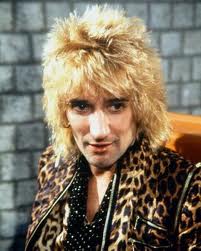
These pairings, already put together for stage and records, are a no-brainer for on-stage holograms: Natalie with Nat.Celine Dion and Sinatra, Ol Blue Eyes and Hayley ReinhartLauren Hill and Bob MarleyLisa-Marie and Elvis and, of course, Rod Stewart and Ella Fitzgerald


The real test for these holographic pioneers will be whether, instead of the usual bathetic, analog, two-dimensional pictures, they are ready to trot out Bob Marley, Lisa Marie and the rest not only as adults, but as cutie pie multi-dimensional three-year-olds and mischievous, precocious teens.

Yes, pairing Rod and Ella is like sinking a leaf blower engine into a Ferrari; like putting Twinkie creme filling into a Godiva chocolate; like putting Donald Trump's hair on Sophia Loren's head. It shouldn't even be conceived of.  It shouldn't be done. But it has been, and it will. 
And remember, you holographic entrepreneurs: it was our idea to do this. Pay up, or the Institute will sic its phalanx of attorneys on you.