Top 50 Jazz Blog

Top 50 Jazz Blog
Showing posts with label Mark Murphy. Show all posts

Saturday, December 23, 2017

Chet Baker Vocals: A New Emotional Space


There were a lot of transitions and innovations in pop and jazz singing during the 1950's. Some of these were triggered by technology-tape recording/editing, hi fi, stereo, new microphones and the long playing record (LP). Other transitions reflected innovations in arranging and instrumentation and the movement of "race music" into the mainstream via rock and roll. Leaving aside innovators in blues, R&B and rock and roll, there were two musicians who effected changes in vocal jazz and pop: Frank Sinatra and yes, Chet Baker.

Frank Sinatra and his arrangers Billy May and Nelson Riddle in "In the Wee Small Hours" (1955) and "Songs for Swingin' Lovers!" (1956) bridged a popular music gap and showed that songs could swing and still deliver an intimate romantic message. 

Chet Baker's style of singing on "Chet Baker Sings" (1954) finished off what Bing Crosby started. Crosby had initiated the movement from "hot" to "cool," as he taught singers how to use the microphone. But, even though Bing's style was relatively laid back, he still used "hot" techniques like vibrato, slurs and small ornamentations to "sell" the tune. This continued to be the standard, but Baker took it a step further, either eliminating or dramatically taking down the heat of these techniques. Also, in the range and timbre of his voice, he did not sound as a man singing was supposed to. Given the negative response by fellow musicians, friends and critics, it took some guts for Baker to continue to sing.
Louis Prima
Baker was one in a long line of trumpet players who sang. Louis Armstrong, Jabbo Smith, Roy Eldridge, Bunny Berigan, Louis Prima, Hot Lips Page and Dizzy Gillespie all sang well. They thought of themselves as entertainers, liked to sing and were happy to give their chops a break. Berigan's style was lighter, but even after he had a hit with "I Can't Get Started," he almost always deferred to a band singer and just played. The rest of those guys sang with a ballsier approach, sometimes ironic or sly, often bluesy. Armstrong always sang romantic tunes, but I hear an artfulness that separates the singer from the object of his affection and the song itself becomes the object. He did sing with great tenderness in the last phase of his career. Baker's singing was the first in this lineage that said out loud: "This is what it means to be vulnerable." 

Baker's trumpet playing was not unique. It was distinguishable from but similar to the playing of others active at that time, like Jack Sheldon, Don Fagerquist, Don Joseph, Tony Fruscella and John Eardley. Of these, only Jack Sheldon also sang. His voice was better than Baker's, but his singing style ranged from cooing drollness to belting. To Sheldon, romantic meant sexy, while Chet was never so indiscreet, or overt. His sexiness was hidden below layers of romanticism and self-protection. 
Jimmy Scott

Rhythmically and in note choice, Baker's singing paralleled his playing. But the fragility, tremulousness and high tenor range of his voice amplified the vulnerable quality of the music. The only voice like it belonged to (Little) Jimmy Scott, who had a hit in 1950 with Lionel Hampton's "Everybody's Somebody's Fool" and who showed up in the same year with Charlie Parker, singing "Embraceable You," but Scott sang with all of the heat that Baker eschewed.

Reading about Baker's foray into singing is like wading into a critical abattoir. Almost no one liked it-musicians, friends or critics. 

There are conflicting stories about how Baker's vocals got recorded. Some say he demanded it and that owner of the Pacific jazz label Dick Bock balked. Others say that Bock wanted it and Baker resisted. Either way, it seems to be true that Baker's inexperience(or ineptitude) made for innumerable retakes, marathon sessions and a lot of audio cutting and pasting. 

Two things were not subject to criticism. One was his phrasing, which rhythmically paralleled his playing. The second was his scatting note choice, which reflected the melodic gift he shows in his trumpet solos.

There was a lot of criticism about his singing out of tune. I'm pretty sensitive to people staying in tune and I don't hear the problem very much, except on some held notes-the hardest to sing in tune and beyond his vocal support system.

Critics blasted his lack of affect, saying his singing lacked emotional weight. Much was made about the girlish, non-masculine quality of his voice. Often this critique was accompanied by an analysis of Baker's life choices-drug use and callousness toward women. People want the artist's life to reflect directly the qualities they find in the art and positive and negative projections about Baker were off the charts. He was worshipped and reviled. Some thought he sang (and looked) like an angel. Others saw him nod out or act like a cad and heard that in the music. 

What I think made critics most uncomfortable is that Baker didn't sing like a man. I've heard people ask, when they heard Baker sing, whether that was a man or a woman. One can only imagine how many such comments were passed in the day. For most of its history, jazz has been a macho culture. Sexual ambiguity or gay-ness were subjects of derision. Chet was heterosexual, but for him to sing the way he did was almost to "come out." Of course, Baker wasn't consciously making a political-sexual point. When he responded to interviewers who challenged his masculinity, he made certain to reaffirm that he liked girls, not "fellers."

Moving from being just a trumpet player to becoming a jazz vocalist/leading man, seeing the response it got from critics and especially from fellow musicians, cannot have been easy. Baker may or may not have been using heavy drugs before "Chet Baker Sings," but there's no doubt that he became more deeply enmeshed in heroin and speed during this period. It's not a big stretch to think that drugs and the incredibly strong response by women to his singing helped Baker weather the brickbats and continue to sing. 

It's appropriate that his most famous vocal tune is "My Funny Valentine." In this Rodgers and Hart tune, we have a psychic match between performer and song. This is a song that spells out the imperfections of the lover ("is your figure less than greek, is your mouth a little weak, when you open it to speak are you smart"). Look at the title itself-my "funny" valentine; not that the lover is funny/humorous, but funny as in-how did this happen-how did I end up with someone like you. This is love as mystery, song as mystery, sung by a musician whose life was lived publicly, but who was a mystery. Yes, we know the biographical facts of Baker's life, but the inner life was shrouded in layers of romanticism and self-protection.
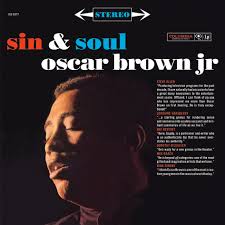
It's difficult to show the influence Baker had, as he didn't overtly inspire a generation of male singers. Most tenor-range jazz vocalists remained more beholden to older approaches. Jimmy Scott, Tony Bennett, Johnny Mathis, Mose Allison, Oscar Brown, Jr., Mark Murphy, Jackie Paris and Sammy Davis, Jr. were all much "hotter" singers. 

But I contend that Chet Baker changed the "field" and in so doing influenced these singers. He brought the ethos of cool to a kind of climax by moving into territory that had once belonged only to female vocalists and opened up the emotional space to show vulnerability; a space that male singers had previously shied away from and which they were now more likely to inhabit. 

Ironic that Chet Baker, who created such distance between himself from others was able to transmute this distance into a kind of intimacy that had rarely, if ever, been expressed in the pop-jazz male voice.

Monday, October 2, 2017

What's the Right Tempo For That Tune?

There aren't that many categories for song tempos in jazz: up/fast, medium-up, medium, medium-slow and ballad/slow, but the permutations are endless. Is there a "right" tempo for a tune? 
Some songs seem to invite a wide latitude of tempo without losing their internal musical-emotional logic. I'd suggest as examples Autumn Leaves, But Not For Me, Come Rain or Come Shine, Our Love is Here to Stay...On the other hand, there are a lot of tunes that really call out for a narrow range of tempos-Good Morning Heartache, St. Thomas, After You've Gone, Donna Lee, Liza...

I find there are certain musicians who seem to always call tunes at the tempo I would choose, like Bobby Hackett, Roy Eldridge and Benny Golson. There are some who stretch tempi a little bit and make them work-Miles Davis (usually slower) and Art Pepper (usually faster) come to mind.

There are musicians like Charles Mingus and Steven Bernstein who sometimes re-work tunes so that they become almost indistinguishable from the standard versions. In this new aesthetic territory, the tempo becomes highly frangible

Then, there are tempo choices that just seem wrong-headed; where either the sentiment of the song or the contour of the melody clashes with the speed at which it's played. It's easier to see this in sung versions where you can hear the words, but in instrumental versions, it can also be irksome.

Let's start by comparing an original conception with a jazz re-working and listen to Kurt Weill play his composition "Speak Low," at 116 beats per minute, followed by Sonny Clark's version of the tune at 170 beats per minute:


In the Clark version, there is a shift between "Latin" and swing in the rhythm section, harmonized background horn parts, virtuosic bop playing. This version does not "Speak Low," but it does build on what the tune offers and essentially creates a convincing new tune on the bones of the old.

In this version of  "Dancing in the Dark," the tempo is a little bit faster than when first introduced in the film "The Bandwagon." The quality of Astaire's delivery does give the sense of this tempo, or something close to it,  being the "right" one.


The very slow tempo Cannonball Adderley chose for the same tune, his melodic ornamentations, interpolations and alterations were extreme enough that for several spins, I wasn't sure if I was hearing the standard or an original ballad by Adderly. See if you can buy into this approach.


Here are two versions of "Young and Foolish." The first is typical of the tempo usually chosen for the tune; perhaps even a bit slower. 

  
In the above, Mark Murphy takes the same tune way up. He uses "stop-times," key changes and horn obligatti for variety and creates a completely different approach. He renders an viable alternate vision, but to me, the lyrics don't really work at this tempo. There's a ruefulness to them that gets steamrolled. 

Here's a Clark Terry revamp of "Somewhere Over the Rainbow." 

The melody actually fits well in this tempo and the performance is terrific. The original emotional impact of the song is swept away here, but its intent is so far away from the original that this version can be taken on its own virtuosic, up tempo terms.

Many jazz people take "My Shining Hour" at an up tempo. I happen to think that the song deserves to be heard at a slower tempo, which is how I do it when I play it. Here are two contrasting versions. 


Degustibus non disputatum est, of course, but I think it's fair to say that when choosing how fast to play an instrumental, there can be a lot of latitude-melodies can often sustain themselves in a wide range of tempos. But, in choosing to alter the usual tempo of a tune with known lyrics, musicians need to reckon with the emotional weight and meaning of the lyrics. 

Monday, July 7, 2014

Chill Vocals, Pt. 2

My personal response to global warming; as heard on my show, the Duplex Mystery Jazz Hour, Thursday, July 3, 2014 on WZBC, 90.3, WZBC.ORG.

Listen Here.

Playlist:

Mark Murphy "On the Red Clay" (Jazz, 1975) on muse 
Count Basie "Whirlybird" from "At Birdland" (Jazz, 1960) on Emus  
June Christy "Something Cool"(Jazz, 1953) on Blue Note 
Duke Ellington & His Orchestra "Take the A Train" (Jazz, 1952) on Columbia 
Ella Fitzgerald "My Reverie" (Jazz, 1960) on Verve 
Chet Baker "Line for Lyons" (Jazz, 1956) on World Pacific 
Jack Teagarden "Don't Tell a Man About His Woman" from "Essential Jazz Vocals" (Jazz) on Verve 
Lee Wiley & Bobby Hackett "STREET of DREAMS" (Jazz, 1950) on Columbia 
Billy Eckstein "Caravan" (Jazz, 1949) on Verve 
Bob Dorough "Something for Sydney" (Jazz, 1997) on Blue Note 
Peggy Lee "That's the Way it Goes" (Jazz, 1941) on Columbia 
Louis Armstrong "Mack the Knife" (Jazz, 1955) on Columbia 
Billie Holliday "Fine And Mellow" (Jazz, 1939) on Commodore
King Pleasure "Golden Days" (Jazz, 1960) on Prestige 
Blossom Dearie "Surrey With The Fringe On The Top" (Jazz, 1958) on Verve 
Mel Torme and the MelTones "Hit the Road to Dreamland" (Jazz, 1959) on Verve 
Joe Williams "Hey Bartender" (Jazz, 1951) on Columbia 
Ella Fitzgerald "Blues in the Night" (Jazz, 1961) on Verve 
Lambert, Hendricks and Ross "Charleston Alley" (Jazz, 1959) on Columbia 
Mose Allison "Ever Since the World Ended" Jazz, 1997) on Blue Note 
Betty Carter "Some Other Time" (Jazz, 1993) on Capital Jazz 
Kurt Elling "Those Clouds Are Heavy, You Dig?" (Jazz, 2009) on Concord 
Vanessa Rubin "Black Coffee" (Jazz, 1995) on novus 
Mark Murphy "Canteloupe Island" (Jazz, 1960) on muse 
Chris Connor "Blue Silhouette" (Jazz, 1954) on Bethlehem 
Joe Williams "Who She Do" (Jazz, 1983) on Delos 


Friday, February 7, 2014

Jazz and Poetry Show

Poets like Pound, Cummings and Eliot began experimenting with form, rhythm and meter in the 1920's. At the same time, poetic practitioners in the Harlem Renaissance opened up to the influence of jazz. Weary Blues, written by Langston Hughes in 1925 was both an imitation of the music and a description of the environment where one watched and listened to the music. In a broad sense, it tried to bring a sense of improvisation to the poetry.

Jazz and poetry hunkered down for a while but re-energized with the coming of the Beats in the 1950's, which is the era wherein most of my playlist derives. Practitioners from that era are scarce, but the tradition maintains itself. There are also later experiments, using electronics and recording techniques, a couple of examples which I include.

Here's the Show.

Here's the Playlist:
Langston Hughes "Weary Blues" 1958 
Bob Dorough "Night and Morn" from "Jazz Canto" (Jazz, 1958) on World Pacific 
Bob Dorough "Daybreak in Alabama" from "Jazz Canto" (Jazz, 1958) on World Pacific 
Jack Kerouac "Blues and Haikus" (Jazz, 1959) on EMI 
Mark Murphy "Parker's Mood" from "Bop for Kerouac" (Jazz, 1981) on muse 
Christopher Logue "Red Bird" from "Red Bird" (Jazz, 1959) on Parlophone 
Kenneth Patchen "As I Opened The WIndow" (Jazz, 1959) on Folkways 
Bob Dorough "Dog" from "Jazz Canto" (Jazz, 1958) on World Pacific 
John Carradine "Poets to Come" from "Jazz Canto" (Jazz, 1958) on World Pacific 
Ben Wright "Sullen Art" from "jazz Canto" (Jazz, 1958) on World Pacific


Ben Wright "Lament" from "jazz Canto" (Jazz, 1958) on World Pacific 
United Future Organization "Poetry And All That Jazz" from "UNITED FUTURE ORGANIZATION" (Jazz, 1993) on Talkin' Loud 

 Mark Murphy "Kool Down" from "Tenth and Parker" (Jazz, 2000)