Top 50 Jazz Blog

Top 50 Jazz Blog

Tuesday, September 8, 2015

Passing the Late Night Jazz TV Torch (?)

Jazz on TV is, of course, a non-starter. Programs like "The Sound of Jazz," "Frankly Jazz,""The Subject is Jazz" and events like Clifford Brown on the Soupy Sales show are to Millennials as Medicine Shows are to seniors.
The last redoubts for jazz were the "hip" talk shows and jazz hasn't had a good track record even there since Johnny Carson retired. The passing of trumpeter Clark Terry, a stalwart of the Tonight Show Orchestra was a symbolic marker of the end of a 60-year relationship between big band jazz and television.               
       
         Clark Terry
Jon Batiste
Jon Batiste will be the bandleader as Stephen Colbert takes over for David Letterman on the Late Show. This represents a return, of sorts, to late night bandleaders with a jazz background. What are his chances? Let's look at the history and the landscape:

Post-Carson, Jay Leno tried to keep one foot in the Tonight Show's jazz past, while bridging to the present with Branford Marsalis, leading to an often uneasy three years. Marsalis was followed by Kevin Eubanks, a better fit who had a fifteen-year tenure. Although Eubanks had jazz chops, he weighed in as a more natural rock guy and his personality jibed better with the format than Marsalis'.

Conan O'Brien's band-Max Weinberg and company-was a hybrid, with a fair amount of swing. Was too much jazz one of the elements that pushed Conan off network TV and onto cable?
David Letterman was a pop/rock/country guy and never cared much for jazz (Knowing Carson was a pretty staunch jazz fan, if Dave really wanted that gig, he shoulda feigned interest). Letterman's band, led by Paul Shaffer, went the funk-jazz route that began to dominate late night TV. Actually it was the Saturday Night Live band that led the way-Howard Shore, with Lenny Pickett's Tower of Power sound on tenor sax. Shaffer was a member of that SNL band, as was Seth Meyers current bandleader Fred Armisen. Cleto Escobeto, Kimmel's bandleader is also out of that tradition. 
Jimmy Fallon's band The Roots, is much more in the contemporary black music vein. While it's true that Jon Batiste and The Roots both bring a black sensibility, it's pretty different. The Roots are Philadelphia and Batiste is New Orleans. The Roots busked on the street, but with bucket drums and rapping. Jon Batiste has an advanced music degree and his family has a long N.O. jazz pedigree. 

Batiste is solid for the Second Line and loves to move into the crowd and stir things up. As far as late night talk show audience participation goes, social media is now where that is supposed to happen (R.I.P. 'Stump The Band'). It's hard to think that the Second Line idea will mix easily in this high-price, high-stakes, timed-to-the-second context. Going into the audience knowing you have exactly 4'33" to get people dancing in the aisle, back onstage and back in their seats might tend to undermine spontaneity. After all, this is valuable time we're talking about.

Well, as we jazz types find ourselves saying more and more often: "maybe a little exposure will help." Can't hurt, right?

[ADDENDUM: I didn't see the whole show, but I did see this clip of "Everyday People," which they performed with a number of guest musicians. Very, very nice job. A few musicians went briefly into the audience, while most stayed onstage; a compromise, but the energy was great and the whole thing didn't drag on, as these multi-star performances usually do.]

Saturday, August 29, 2015

Donna Lee Sing-Along

In honor of Charlie Parker's birthday, here's the tune Donna Lee, with my lyrics below. You're all invited to think of me as the bebop Mitch MIller and sing along.


DONNA LEE
Donna Lee has a melody that teaches us that
Learning the trade of music takes a lifetime,
But the joy that comes from knowing that this
Rocky road you choose can let you
Open up your soul,
To the mysteries around you,
Means the path has found you.
Sing a tune by Charlie Parker or a ballad by Sinatra,
Anything that can train your ears to listen
To the subtlest things.
Honeysuckle Rose can sing but
She gets bored with singing in just one key.
Learning the trade of music you must
Set a goal like learning to sing Miss
Donna Lee in twelve keys,
Only time can make it happen,
You had no idea time could possibly go so slow…
When you have heard the half steps and the
Minot thirds you think you’re almost home only
Now you see that you’ve got four bars left to sing without a breath
But now you’re flying you know Donna Lee won’t get the best of you.

Friday, August 28, 2015

Tunes From Swing Street


Playing pre-war music from some of the denizens of 52nd St. on the Duplex Mystery Jazz Hour WZBC with Steve Provizer 08/27/2015.


 Eddie Condon and His Orchestra "The Eel" 1933 on Brunswick 
 Eddie Condon and His Orchestra "Home Cooking"  1933) on Brunswick 
 Eddie Condon and His Orchestra "Tennessee Twilight" 1933 on Columbia 
 Eddie Condon and His Orchestra "Madame Dynamite" 1933) on Columbia 
 Frank Froeba & His Swing Band "The music goes round and round" 1935 on Columbia 
 Louis Prima & His New Orleans Gang "Let's Have a Jubilee" 1934)on Brunswick 
 Louis Prima & His New Orleans Gang "House Rent Party Day" 1934 on Brunswick 
 Stuff Smith And His Onyx Club Boys "Old joe's hittin' the jug" 1936 on Vocalion 
 Stuff Smith And His Onyx Club Boys "Your'e a Viper"  1936 on Vocalion 
 Red McKenzie and his Rhythm Kings "What's the reason I'm Not Pleasin You" 1935 on Vocalion 
 Red McKenzie and his Rhythm Kings "You've Been Taking Lessons in Love" 1935 on Vocalion 
 Wingy Manone & His Orchestra "Isle of Capri" 1935 on Vocalion 
 Wingy Manone & His Orchestra "Nickel in the Slot" 1935 on Okeh 
 Henry Allen And His Orchestra "Every Minute of the Hour" 1936 on Vocalion 
 Henry Allen And His Orchestra "Lost" 1936 on Vocalion 
 Frank Newton & His Uptown Serenaders "You showed me the way 1937 on Variety 
 Frank Newton & His Uptown Serenaders "The Onyx Hop" 1937 on Variety 
 The Three Peppers "Swing Out, Uncle Wilson" 1937 on Variety 
 The Three Peppers "The Duck's Yas Yas Yas" 1937 on Variety 
 Joe Marsala & His Chicagoans "Jazz Me Blues" 1937)on Variety 
 Fats Waller and his Hot Piano "I'm Crazy About My Baby"1931 on Columbia 
 Art Tatum "Tea for Two" 1933 on Brunswick 
 Art Tatum "Sophisticated Lady" 933 on Brunswick 
 Teddy Wilson "Rosetta" 1935 on Brunswick 
 Teddy Wilson Between the devil and the deep blue sea" 1937 on Brunswick 
 Clarence Profit Trio "Don't Leave Me" 1939) on Previously Unissued 
 Maxine Sullivan and Her Orchestra "loch lomond" 1937 on Vocalion 
 Bunny Berigan and His Boys "A Little Bit Later On" 1936 on Vocalion 
 John Kirby and His Orchestra "Can't We Be Friends ?" 1940 on Columbia 
 John Kirby and His Orchestra "Coquette"1940)on Columbia 
 Billie Holiday and Her Orchestra "I Hear Music" 1940 on Okeh 
 Charlie Barnet & His Orchestra "Overheard in a Cocktail Lounge" 1937 on Variety 
 Billie Holiday and Her Orchestra "Practice Makes Perfect" 1940 on Okeh 

 Mildred Bailey and Her Orchestra "More Than You Know" 1936 on Vocalion 

Sunday, August 23, 2015

Fletcher Henderson, Part II


The second of two Duplex Mystery Jazz Hours devoted to Fletcher Henderson and His Orchestra, broadcast 8.21.15 on WZBC.ORG.

LISTEN HERE

PLAYLIST

Fletcher Henderson and His Orchestra "Come on Baby" (Jazz, 1928) on Columbia

Fletcher Henderson and His Orchestra "Freeze N Melt"  1929) on Columbia

Fletcher Henderson and His Orchestra "Raisin the Roof"  1929) on Romeo

Fletcher Henderson and His Orchestra "Blazin'" (Jazz, 1929) on Columbia  

Fletcher Henderson and His Orchestra "Wang Wang Blues"  1929) on Columbia 

Fletcher Henderson and His Orchestra "Chinatown" (Jazz, 1930) on Columbia 

Fletcher Henderson and His Orchestra "Somebody Loves Me" 1930) on Columbia 

Fletcher Henderson and His Orchestra "Keep a Song in Your Soul" 1930 Columbia 

 Fletcher Henderson and His Orchestra "Sweet and Hot" (Jazz, 1931) Columbia  

Fletcher Henderson and His Orchestra "My Gal Sal" (Jazz, 1931) on Columbia 

 Fletcher Henderson and His Orchestra "Sugarfoot Stomp" 1931) on Columbia  

 Fletcher Henderson and His Orchestra "Clarinet Marmalade" 1931) on Columbia 

 Fletcher Henderson and His Orchestra "Hot and Anxious"  1931) on Columbia  

 Fletcher Henderson and His Orchestra "Comin' and Goin'"  1931) on Columbia 

 Fletcher Henderson and His Orchestra "Singin' the Blues" 1931) on Columbia 

 Fletcher Henderson and His Orchestra "Sugar" from "" 1931) on Columbia  

 Fletcher Henderson and His Orchestra "Blue Moments"  1932) on Unissued Master

 Fletcher Henderson and His Orchestra "New King Porter Stomp" 1932) Okeh

Fletcher Henderson and His Orchestra "Underneath the Harlem Moon" 1932 Columbia 

 Fletcher Henderson and His Orchestra "Honeysuckle Rose" 1932) on Columbia 

 Fletcher Henderson and His Orchestra "Yeah Man" (Jazz, 1933) on Vocalion 

 Fletcher Henderson and His Orchestra "Queer Notions" (Jazz, 1933) Vocalion 

 Fletcher Henderson and His Orchestra "Can You Take It?" 1933) on Vocalion 

 Fletcher Henderson and His Orchestra "King Porter’ Stomp" 1933) on Vocalion 

 Fletcher Henderson and His Orchestra "Christopher Columbus" 1936) Vocalion 

 Fletcher Henderson and His Orchestra "Stealin' Apples"  1936) on Vocalion 

 Fletcher Henderson and His Orchestra "Blue Lou" 1936) on Vocalion 

Fletcher Henderson and His Orchestra "Rhythm Of the Tambourine" 1937) Vocalion 

Fletcher Henderson and His Orchestra "Back in Your Own Backyard" 1937 Vocalion 

 Fletcher Henderson and His Orchestra "Chris and His Gang" 1937) on Vocalion 

 Fletcher Henderson and His Orchestra "Sing You Sinners" 1937) on Vocalion 

 Fletcher Henderson and His Orchestra "Moten Swing" (Jazz, 1938) on Vocalion 


Wednesday, August 19, 2015

10 Ballads to Slow Down Summer

I'm still cold from last winter, so the idea of rounding the corner into autumn is not thrilling. I invite you to luxuriate in these beautiful ballads. Let them keep the thought of neck-high snow at bay while they temper the burn of August heat.

Clifford Brown-I Don't Stand a Ghost of a Chance


Lawrence Brown, Ben Webster-All Too Soon


Friday, August 14, 2015

Fletcher Henderson, Pt. 1

The first of two Duplex Mystery Jazz Hour programs on the large ensembles of Fletcher Henderson who, along with arranger Don Redman, is largely responsible for what became "swing" music. Broadcast 8.14.15 on WZBC.

Listen HERE.

PLAYLIST

 Fletcher Henderson "The Dicty Blues" (1926) on Columbia 
 Fletcher Henderson "Teapot Dome Blues" (1926) on Columbia 
 Fletcher Henderson "Go Long Mule"  (1926) on Columbia 
 Fletcher Henderson "Shanghai Shuffle"  (1926) on Columbia 
 Fletcher Henderson "Copenhagen"  (1926) on Columbia 
 Fletcher Henderson "How Come You Do Like Me Like You Do?"  (1926) on Columbia 
 Fletcher Henderson "Everybody Loves My Baby" (1926) on Columbia 
 Fletcher Henderson "Sugarfoot Stomp" (1926) on Columbia 
 Fletcher Henderson "What-cha-call-em Blues" f(1926) on Columbia 
 Fletcher Henderson "T.N.T."  (1926) on Columbia 
 Fletcher Henderson "The Stampede" (1926) on Columbia 
 Fletcher Henderson "Jackass Blues"  (1926) on Columbia 
 Fletcher Henderson "Henderson Stomp"  (1926) on Columbia 

NOTE: The second CD I recorded from the show was corrupted, so the following part of the playlist is not on this recording.

 Fletcher Henderson "The Chant"  (1926) on Columbia 
 Fletcher Henderson "Snag It" (1926) on Columbia 
 Fletcher Henderson "Rocky Mountain Blues"  (1926) on Columbia 
 Fletcher Henderson "Tozo" f (1926) on Columbia 
 Fletcher Henderson "St Louis Shuffle"  (1926) on Columbia 
 Fletcher Henderson "Whiteman Stomp"  ( 1926) on Columbia 
 Fletcher Henderson "I'm Coming Viginia" (1926) on Columbia 
 Fletcher Henderson "Variety Stomp"  (1926) on Columbia 
 Fletcher Henderson "St. Louis Blues"  (1926) on Columbia 
 Fletcher Henderson "Goose Pimples" (1926) on Columbia 
 Fletcher Henderson "Hop Off" (1927) on Columbia 
 Fletcher Henderson "King Porter Stomp"(1928) on Columbia 
 Fletcher Henderson "D Natural Blues" (1928) on Columbia 
 Fletcher Henderson "Oh Baby" (1928) on Harmony 
 Fletcher Henderson "Feeling Good"  (1928) on Harmony 
 Fletcher Henderson "I'm Feeling Devilish"  (1928) on Harmony 
 Fletcher Henderson "Old Black Joe Blues" (1928) on Romeo 


Wednesday, August 12, 2015

Holographic Necrophilia


Very glad to see that the holographic techs and entrepreneurs have expanded the resurrection of dead musicians into more than just an audio experience. Now it's time to take it a step further and bring back those who've been paired in recordings to an audience hungry for the 3 (and soon to be 4)-D concert experience. 

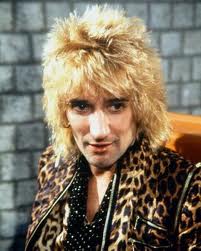
These pairings, already put together for stage and records, are a no-brainer for on-stage holograms: Natalie with Nat., Celine Dion and Sinatra, Ol Blue Eyes and Hayley Reinhart, Lauren Hill and Bob Marley, Lisa-Marie and Elvis and, of course, Rod Stewart and Ella Fitzgerald, 


The real test for these holographic pioneers will be whether, instead of the usual bathetic, analog, two-dimensional pictures, they are ready to trot out Bob Marley, Lisa Marie and the rest not only as adults, but as cutie pie multi-dimensional three-year-olds and mischievous, precocious teens.

Yes, pairing Rod and Ella is like sinking a leaf blower engine into a Ferrari; like putting Twinkie creme filling into a Godiva chocolate; like putting Donald Trump's hair on Sophia Loren's head. It shouldn't even be conceived of.  It shouldn't be done. But it has been, and it will. 
And remember, you holographic entrepreneurs: it was our idea to do this. Pay up, or the Institute will sic its phalanx of attorneys on you.


Monday, August 10, 2015

The Rahsaan Program


An hour and a half of music celebrating the great spirit Rahsaan Roland Kirk on the Duplex Mystery Jazz Hour, WZBC, 8/6/15.

Listen HERE. If clocking that doesn't work, try this: https://goo.gl/wqDAiu

PLAYLIST

Triple Threat, Triple Threat-King, 1956  
Our Love Is Here To Stay, Introducing Roland Kirk, Argo, 1960
Kirk's Work Roland Kirk & Jack McDuff, Prestige, 1961 
We Free Kings, Mercury, 1961
I Talk With The Spirits, Limelight, 1964
Peggy's Blue Skylight, Tonight at Noon, Atlantic 1965 
Inflated Tear The Black and Crazy Blues, A Laugh for Rory, Many Blessings, Atlantic ,1967
Volunteered Slavery, Atlantic, 1969
Runnin' From the Trash, Natural Black Inventions: Root Strata-Atlantic, 1971
Bright Moments- Atlantic, recorded at Keystone Korner, San Francisco, June 1973 
Ain't No Sunshine From Blacknuss, Atlantic,1972
Pedal Up, Down Beat 1975 poll-winners' show
Anysha, Other Folks' Music, Atlantic, 1976
Watergate blues, Boogie-Woogie String Along For Real,Warner Bros, 1977
Theme for the Eulipions, The Return of the 5000 Lb. Man, Warner Bros., 1976
I Eye eye Montreux Jazz Festival video, 1972

Thursday, August 6, 2015

New Orleans Trumpets and the Lowly Hankie

I know what you're saying: finally, a post that combines jazz and handkerchiefs...

Truth is, the lowly handkerchief has a venerable presence in New Orleans jazz trumpet. Maybe it's the humidity. One of the first great New Orleans trumpeters, Freddie Keppard, played with a handkerchief covering his valves-at least when he thought other trumpet players were close enough to cop his fingerings, although Sidney Bechet disputes that. Freddie seems to have been paranoid enough about other players copping his licks that he apparently ceded the chance to make the first "jazz" recording to the Original Dixieland Jazz Band.
Tommy Ladnier, another user of the handkerchief. 


Friday, July 24, 2015

Benny Golson Show

The Duplex Mystery Jazz Hour of 7.23.15 on WZBC.ORG, 90.3 featured Benny Golson, one of the most singular talents in jazz: tenor sax master, arranger and composer of some of the great jazz tunes: Stablemates, Whisper Not, I Remember Clifford...

Listen HERE.

PLAYLIST

Benny Golson Nonet "Whisper Not" from "Benny Golson's New York Scene" (Jazz, 1957) on Contemporary Records 

Benny Golson Quintet  "Something In B Flat" from "Benny Golson's New York Scene" (Jazz, 1957) on Contemporary Records 

Benny Golson Sextet "Step Lightly" from "The Modern Touch" (Jazz, 1957) on Riverside 

Benny Golson Sextet "Hymn To the Orient" from "The Modern Touch" (Jazz, 1957) on Riverside 

Art Blakey & The Jazz Messengers "Blues For Marcel" from "Des_Femmes_Disparaissent_(Soundtrack)" (Jazz, 1958) 

Benny Golson And The Philadelphians "Stablemates" from "Benny Golson And The Philadelphians" (Jazz, 1958) on United Artists 

Art Blakey and The Jazz Messengers "Along Came Betty" from "Moanin'" (Jazz, 1958) on Blue Note 

Art Farmer-Benny Golson Jazztet "Along came Betty" from "Another Git Together" (Jazz, 1962) on Mercury 

Benny Golson Quintet "A Bit of Heaven" from "Gone With Golson" (Jazz, 1959) on Prestige 

Benny Golson (solo) "You're My Thrill" from "Take A Number From 1 To 10" (Jazz, 1960) on ARGO 

Benny Golson (duo) "My Heart Belongs to Daddy" from "Take A Number From 1 To 10" (Jazz, 1960) on ARGO 

Benny Golson Quintet "Little Karin" from "Take A Number From 1 To 10" (Jazz, 1960) on ARGO 

The Jazztet "Farmer's Market" from "Jazztet at Birdhouse" (Jazz, 1961) on ARGO 

Annie Ross "Farmer's Market" from "Farmer" (1952) on Prestige 

The Jazztet and John Lewis "Milano" from "The Jazztet and John Lewis" (Jazz, 1961) on ARGO 

Benny Golson's Orchestra "You're Driving Me Crazy / Moten Swing" from "Pop+Jazz=Swing" (Jazz, 1962) on Audio Fidelity 

Benny Golson's Orchestra "Ornithology / How High The Moon" from "Pop+Jazz=Swing" (Jazz, 1962) on Audio Fidelity 

Art Farmer - Benny Golson Sextet "Killer Joe" from "Meet the Jazztet" (Jazz, 1960) on ARGO 

Manhattan Transfer "Killer Joe" from "Vocalese" (Jazz, 1985) on Atlantic 

Benny Golson Quartet "Mad About the Boy" from "Free" (Jazz, 1963) on ARGO 

Benny Golson And The International Jazz Orchestra "Stockholm Sojourn" from "Stockholm Sojourn" (Jazz, 1964) on Prestige 

Benny Golson Sextet "If I should Lose You" from "Just Jazz" (Jazz, 1962) on Audio Fidelity 


Tuesday, July 7, 2015

Jazz Bass Technique Evolution-Pt. 2

The question inspiring these bass posts is: Has the playing on this instrument progressed farther technically than on any other jazz instrument?

In Part One, we listened to foundational tuba and bass players from the 20's and 30's. We'll pick up now starting with Jimmy Blanton who, if not the first "modern" player, has as good a claim to that title as anyone.
Jimmy Blanton
Blanton's strong regional reputation led him to Duke Ellington's band in 1939, where he played until he died in 1942, at age 23, from TB.

Slam Stewart had the technique of the walking bass line down, but was also unique in his ability to bow solos and sing/hum along with them (see my previous post on arco-bowed-bass playing.

Thursday, July 2, 2015

Jazz Bass Technique Evolution

Watching Stanley Clarke, Marcus Miller and Victor Wooten led me to ask whether the technique used to play any instrument in jazz has evolved farther from its beginnings than the bass:
                                     
 
The role of the bass in early jazz was to keep time and harmony, a more limiting role than that taken by horn players, who were free to create and embellish melodies and counter-lines. So, you had Bechet, Armstrong, Morton, Hawkins, Dodds, etc., able to take all the technique they'd acquired and put it in service to the music. It's also relevant that until the early 1930's, in order to make a living, players had to learn to play both string bass and tuba, instruments requiring very different techniques.

Early bass and tuba players in jazz occasionally stepped out beyond their usual role, but going too far, too often, in a polyphonic and/or horn-dominated environment would have meant straying too far from the anchoring role the bass was expected to play. One does get a whiff of an untapped reservoir of technique from the occasional startling solo and the overall assurance of the playing.

Here's Bill Johnson, slapping and bowing. Interesting that it's in the "primitive" musical context of jug and comb-kazoo:


Here's Steve Brown, making sure he's audible by bowing his way through the tune and playing a tricky bowed-plucked solo:


Tuesday, June 30, 2015

Bob Dylan and the Jazz Avant-Garde

Bob Dylan performed at the 80th Sinatra birthday tribute in 1995. In 2004, he joined forces with Wynton Marsalis at a benefit concert for Jazz at Lincoln Center and his 2015 release, Shadows in the Night was, let's say, jazz-informed, but early on in his career, Dylan had truck with edgier jazz folk.

While not on the level of finding the lost Buddy Bolden cylinder, it would be interesting to hear a recording of Bob Dylan and Cecil Taylor when they jammed on The Water is Wide in the early 1960's. Dylan mentions this session in his Chronicles, Vol 1 and adds: "Cecil could play regular piano if he wanted to." Note that Tom Wilson, Dylan's producer at this time, produced Cecil Taylor's first LP, Jazz Advance. 

Cecil Taylor
Bob and Tom Wilson
Here's the tune in a 1975 incarnation, with Dylan and Joan Baez.


Dylan says he also jammed with Ornette Coleman associates drummer Billy Higgins and trumpeter Don Cherry. No specific tunes are mentioned.


Listen to the group and imagine what you will.


These musical intersections happened, says Dylan: "...at a creepy...little coffeehouse on Bleeker Street near Thompson run by a character called the Dutchman." I'm surmising it was the Cafe Rafio, at 165 Bleecker. 
Dylan also says that he crashed a Thelonius Monk rehearsal where he told Monk that he played folk music. Monk's reply: "We all play folk music."

Thanks to Elijah Wald for passing on much of the info in this post. Be on the lookout for Elijah's book on the 50th anniversary of Dylan going electric at Newport. It's due out in a couple of weeks. Go here for info.


Wednesday, May 27, 2015

Miles is to Picasso as Who is to Whom

In a well-known interview with Sonny Rollins and Gary Bartz, Miles Davis is likened to Picasso. Like Miles, Coleman Hawkins and John Coltrane went through cycles of intense artistic change; less so, other of the musicians in this post: Bix, Red Allen, Hampton and Shepp. And, like Picasso, the artists here sometimes had a dominant style and sometimes went through significant changes (not to mention working in different media). But, since this is pure subjectivity, not scholarly research, I'm using a single well-known work by the musicians and artists to present a simple case for their aesthetic linkage. Look and listen.

Bix and Joan Miro.                            


***************
Coleman Hawkins and John Marin
                     

Friday, May 22, 2015

More Live Music on the Duplex


Acting under a strict injunction by the FCC to get live jazz on the airwaves, the Duplex Mystery Jazz Hour on WZBC.ORG this week featured in-studio playing by tenor saxophonist Rich Halley and trombonist Michael Vlatkovich, members of the Rich Halley 4, which played at the outpost186 on 5.22.15. I also played a few recordings by the band. Other members of the group are Clyde Reed on bass and Carson Halley on drums.

Listen to this one hour show HERE.

Friday, May 15, 2015

Charlie Kohlhase on the Duplex

Charlie K., one of the main folks on the Boston jazz scene, guested on the Duplex Mystery Jazz Hour on WZBC, 5.14.15. I played some tracks featuring Charlie and he was also kind enough to allow me to put him on the spot with some blindfold tests, which are scattered throughout the program.

You can hear it HERE.


Playlist
Charlie Kohlhase Quintet "Tout De Moi" from "Plays Roswell Rudd" (Jazz, 2000) on NADA 

Charlie Kohlhase Quintet "Emanation" from "Plays Roswell Rudd" (Jazz, 2000) on NADA 

Red Rodney "Dig This" from "Quintets 1955-59" (Jazz, 1955) on Fresh Sound 

Kenny Dorham "Sunrise in Mexico" from "Whistle Stop" (Jazz, 1961) on Blue Note 

Charlie Kolhase "Decide for Yourself" from "Adventures" (Jazz, 2009) on Boxholder 

Bob Dorough "Right On My Way Home" from "Right on My Way Home" (Jazz, 1997) on Blue Note 

Serge Chaloff "Keen and Peachy" from "Keen and Peachy" (Jazz, 1950) on Uptown 

Charlie Kolhase Quintet "Eventuality`" from "Eventuality" (Jazz, 2000) on NADA 

Fud Livingston "Humpty - Dumpty" from "The Story of F.L." (Jazz, 2009) on Jazz Oracle 

Charlie Kolhase "Mergens Merganser" from "You Start" (Jazz, 2000) on Boxholder 

Ron Miles "Erase Yourself" from "My Cruel Heart" (Jazz, 1996) on Gramavision 

Mario Pavane Sextet "Day of the Dark Bright Light" from "Deez to Blues" (Jazz, 2006) on Playscape 

Cab Calloway & Chu Berry "Special Delivery" from "Penguin Swing" (Jazz, 1938) on Archives of Jazz 


Monday, May 4, 2015

Jazz, Junk, Cool and Nostalgia


So, who gives a crap about nostalgia, that fatuous relict of Ye Olde Bullshit Shoppe? I do.

nos.tal.gia. From two Greek words: nostos (homesickness) and algos (pain).


Notwithstanding the abuse it takes, nostalgia is a singular brain state of happy/sad/hyper-self conscious/free-floating-ness that feels like nothing else. When any emotional state grabs me that hard, I pay attention.

Jazz-the music itself-doesn't traffic much in nostalgia, although jazz-the listeners-with their wax and catalogues, do. Jazz musicians are known for not wanting to listen to their own old recordings, but name me a jazz fan who can't tell you the first album they bought.


Out-and-out schmaltz, like Jackie Gleason jazz records, or schticky trad bands are more bathetic than nostalgic. Unrooted in any particular time, they lack the weight to induce nostalgia, although they may induce a treacly simulacrum. In fact, I think there's an anomalous combination of elements that can make it happen in jazz.
                     
                             Shmaltz + Cool = nostalgia.

Miles, then, would seem to be a candidate-plays a lot of ballads and medium tempi, often uses the harmon mute, cultivates an elusive persona-but his playing lacks schmaltz, which keeps it cool and non-nostalgic. (Miles Davis, the Bertolt Brecht of jazz?)


Chet Baker's pose is emotionally distant, like Miles, but Baker's music has the schmaltz and is nostalgic. His drug habit makes sense in this context. Heavy dope is not about being here now. The Now is Just Too Much. It's about retreating to a place of your own imagining; hassle-free, light (not heavy), but not without bittersweetness. This is also a credible definition of nostalgia. We relate to the music with a sigh, a sense of yearning, an emotional attachment to the notes. 

I don't know of a lot of tracks in jazz that use the word "nostalgia." The two below are the most well-known and are often covered. The first, by Fats Navarro, is in a medium tempo and actually has many of the qualities I defined as nostalgic. Despite the fact that Fats was one of the most declamatory trumpet players, he tempers his style and his solo here fits well in the emotional framework established by the song.


We think of Charles Mingus as one of the least nostalgic players-and people; seemingly, always searching for new musical routes, staunchly in the moment, to the extent that his groups were "workshops" and he taught his musicians their parts by singing them. He also had a streak of violence we don't associate with nostalgia.

While the tempo of this tune is slightly slower than the Navarro, the rhythmic approach is choppy and the second restatement of the tune is even choppier, which actually makes it seem faster. There is a fair amount of dissonance in the melody and little of the lilt and legato of the Navarro. Being nostalgic in Times Square is no simple matter.


OK, now to contrast Miles and Chet, here are their versions of My Funny Valentine. Of course, Miles never sang, and that makes a hell of a difference, but just listen to their horn solos.


Kudos, contrary opinions, suggestions for inclusion, elision and relevant EKG's are welcome.

Was turned on to Svetlana Boym by Artemis Nasby. Found a great essay about nostalgia written by her here.

Tuesday, April 28, 2015

Pepper, Desmond and Shank


Not a law firm. Art Pepper, Paul Desmond and Bud Shank are white alto sax players who eschewed the hard-edged sound and harmonic approach of Charlie Parker. There were other well-known white sax players in the 1950's: Phil Woods, Joe Maini, Herb Geller and Charlie Mariano who, because of their approach and tone, fell more into the lineage of Charlie Parker. I'd call Gene Quill a borderline case, with one foot in each camp. 

To a large extent, Pepper, Desmond and Shank became the (alto sax) personification of the West Coast versus East Coast schism and represented a lightning rod for racial tension in jazz during the 50's and 60's (the New York-based Lee Konitz did also, but to a lesser degree).

This tension is a major subplot in Straight Life, the Story of Art Pepper. A fascinating read, Pepper's jumble of self-delusion, introspection and braggadocio is not the place to go for an objective examination of social issues. But, although clearly sometimes a prick, Pepper is convincing in his descriptions of the resentment that some black musicians felt toward him and the insults he suffered as a result of being white and playing jazz.

I'm not going to try and parse out the threads of the racism/reverse-racism issue–abandon hope all who enter there. But, there are some interesting questions that can be asked. Were there black musicians playing in this softer, non-Bird style? Were they not being recorded because of the same recording industry biases that prevented black bands from being recorded in the 1920's playing anything but "hot" music? Did group/political pressure keep black musicians from pursuing this avenue of creative approach? These white musicians seemed to be consciously trying to carve out a different musical space-was it inevitable they end up sharing so much of the same space, one that prioritized sweetness of sound, ballad playing, slightly less blues emphasis and the creation of melodic lines instead of vertical chord delineation? 

It would take hundreds of tracks to properly characterize how these guys sound, but I'll present a ballad and an up tempo performance from each to give a sense of their playing. First, ballads.

Art Pepper


Paul Desmond


Bud Shank (starts at :53)


And, uptempo.
Bud Shank (Cooper solos first)


Pepper


Desmond-(hard to find uptempo, rhythm-changes-type tracks like Scrapple)


My take: Pepper's tone is slightly more tart than the others. Desmond uses the most vibrato, then Shank and Pepper. In the uptempo tracks, a non-Bird approach seems to fall naturally under Pepper's fingers. Shank falls back more on Bird, but does find other pathways through the changes, albeit in a seemingly less natural way. Desmond's uptempo approach is all about the lines. It's more spare and he plays behind the beat more often. In sum, though, there is a very strong resemblance in their playing.

In any case, and broader cultural questions aside, I'm happy to hear any of these guys blow in a playlist that also includes hard boppers like Gigi Gryce, Cannonball Adderly, Sonny Criss...

As happens more and more often, the discussion about this post is happening not here, but on social media. If you want to read that discussion, go here. You're also welcome to leave a comment here.

Friday, April 10, 2015

Unaccompanied solos, Live and Recorded


Happy to have baritone sax player Zach Mayer on the 4/9/15 ‪Duplex Mystery Jazz Hour on WZBC.
Also, happy to jam with him (at about the half-hour mark). The live playing is interspersed with the recordings.

Check out the playlist. There will be some things you know and probably some you don't.


LISTEN HERE.

Charlie Parker's Earliest Recording 1940 ~ Honeysuckle Rose/Body and Soul‬-4:00

Coleman Hawkins "Picasso" from "Picasso" (1948) on Verve 3:15

‪Artie Shaw- These Foolish Things‬--Decca 1953 3:12"

Chet Baker- "Spring is Here" from "Chet With Strings" 1954) on Columbia 1:15

Mike Brecker- "‪Funky Sea, Funky Dew ‬part 2" from "‪Funky Sea, Funky Dew ‬part 2" 1980 on youtube-7:50 0

Eric Dolphy- "God Bless the Child (1961) [Live]" from "The Illinois Concert" (1963) on Blue Note 8'50"

Tom Harrell- "Joy Spring" from Helen Merrill's "Brownie: Homage to Clifford Brown" (1995) Verve-4'

‪McCoy Tyner- "In A Sentimental Mood‬" from "In A Sentimental Mood" (1974) 6:30

Bob Mintzer- ‪Bass Clarinet Solo.mp4‬-"Improvization" youtube-3:20

Thomas Kneeland- "Confirmation" (Jazz) on youtube--2'50"

John Coltrane- "I Want to Talk ABout You" from "Live at Birdland" (Jazz, 1964) on Impulse! 8:15

‪Anthony Braxton "#5" from "Alto Saxophone Improvisations‬" (1979) on Arista #5-4'30"

Carol Sloan- "Never Never Land" from "live" (Jazz, 1985) on youtube- 2'

‪Jimmy Giuffre‬- "The Sheepherder" from "‪The Jimmy Giuffre Clarinet 1956‬" (1956) on Capital 5'30"

‪Wynton Marsalis- "Stardust‬" from "Stardust" on youtube- 2'

‪Robin Eubanks- "Intro to Blues for Jimi‬" from "Intro to Blues for Jimi" on youtube- 3'30"

Joe Pass -"‪Joe's Blues‬" from "‪Joe's Blues‬" (Jazz) on youtube-5'30"

Bobby McFerrin- "Drive" from "Live" 1987 on youtube-faded out