Top 50 Jazz Blog

Top 50 Jazz Blog

Friday, June 6, 2014

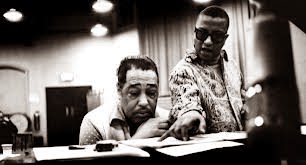
Extended Ellington


If you missed the Duplex Mystery Hour that played long-form works of Ellington-and Strayhorn-on Thursday June 5, 5-7 PM. check out the playlist below and listen to the audio, archived at http://wzbc.org/#archive

Playlist:

 Duke Ellington "Creole Rhapsody" from "Creole Rhapsody" (Jazz, 1931) on Brunswick 
 Duke Ellington "Reminiscing in Tempo" (Jazz, 1935) on Brunswick 
 Duke Ellington "Symphony in Black (A Rhapsody of Negro Life)"(Jazz, 1935) 
 Duke Ellington "Clarinet Lament" (1936) on Brunswick 
 Duke Ellington "Boy Meets Horn" From Fargo, 1940 (Jazz, 1940) on Jazz Classics 
 Duke Ellington "Harlem Air Shaft"(Jazz, 1940) on Victor 
 Duke Ellington "Jump for Joy (Jazz, 1941) on Victor 
 Duke Ellington "Black, Brown, and Beige" (1944) on RCA 
 Duke Ellington "The Harlem Suite" (Jazz, 1951) on Columbia 
 Duke Ellington "A Drum is a Woman" (Jazz, 1957) on Columbia 
 Duke Ellington "Such Sweet Thunder" from "The Queen Suite" (Jazz, 1957) on Columbia 
 Duke Ellington "Anatomy of a Murder theme" from "Anatomy of a Murder" (Jazz, 1959) on Columbia 
 Duke Ellington "Happy Anatomy" from "Happy Anatomy" (Jazz, 1959) on Columbia 
 Duke Ellington "Paris Blues" from "Paris Blues" (Jazz, 1961) on United Artists 
 Duke Ellington "First Sacred Concert" (Jazz, 1965) 
 Duke Ellington "Tourist Point of View" from "The Far East Suite" (Jazz, 1966) on RCA 
 Duke Ellington "Bluebird of Delhi" from "Far East Suite" (Jazz, 1966) on RCA 
 Duke Ellington "Isfahan" from "Far East Suite" (Jazz, 1966) on RCA 

Wednesday, June 4, 2014

Take the Test: Which Dead Dictator Are you?


The reflected glory that people are sponging up by associating themselves with famous dead painters, musicians, etc. and which is now sweeping the social media, has been duly noted by The Institute


We have put our own stamp on the whole fiasco, with a test by which you can discover which dead dictator you most closely resemble. Ready? Let's do it.

Your favorite activity on a day off is:
  1. De-barking a maple tree
  2. Trashing a hotel room
  3. Mugging a barista


What's your favorite gun magazine?

  1. Guns and Ammo
  2. American Handgunner
  3. Shooting Times
  4.  Guns of the Old West


Which is these is most important to you?

  1. A well-stocked bomb shelter
  2. A tidy armaments cabinet
  3. New wallpaper in the Safe Room


You're invited to a party. What do you bring?

  1. Stink bombs
  2. Flamethrower
  3. Nothing. Your capacity for verbal invective is gift enough


Where would you most like to live?
  1. Area 51
  2. Under the ruins of the Berlin Wall
  3. Cape Cod


Which of these statements best describes you?
  1. I tend to be a bit moody
  2. Ozzy-lover from the git go
  3. I live to loot


My political views are:
  1. Inscribed in gold tablets and hidden in Salt Lake City
  2. Known only to me and Gordon Liddy
  3. Tattooed on my butt
Nero
To get your scientifically generated, certified personalized results, send $50 in a plain brown envelope to The Institute, c/o this blog.

Friday, May 30, 2014

Jazz Underdogs and the Racial Tinge-Pt. 1


The history of jazz is complicated and resists a simple through-line narrative. It arose as a beautifully haphazard cross-pollination between musicians stable or itinerant, schooled or unschooled, making their work easier by creating songs and shouts, picking up tunes from brass and circus bands, listening in speakeasies and dance halls... All of this happening at dozens, probably hundreds of places across the U.S. 
Those would try to shape jazz into easy stories ("born in New Orleans and travelled up the river to Chicago" sound familiar?) need to keep in mind what Quantum Physics teaches us about measurement: nothing is static and the fact that you're measuring something changes its behavior. So, the observer can measure either its position or its movement, not both.


The commonest way to observe (i.e. freeze) the jazz story is through what I call the Jazz Hero approach; in other words, canonization. To make any canon viable takes historical buttressing, in the form of "experts" who produce books, collections of recordings, films, radio and television shows purporting to be historically "definitive."  The two most powerful recent examples were the Smithsonian Anthology of Jazz and the Ken Burns documentary

Jazz dissidents, who know that the Hero's shadow tends to suppress the work of other fine musicians and to over-simplify the process of creation, are always ready to undertake a critique of the canonization process. I've devoted a certain amount of space here and on my radio show The Duplex Mystery Hour to highlighting the work of musicians I think worthy of more attention: Miff MoleJabbo Smith, Charlie Shavers, Howard McGhee/Fats Navarro, The Roane Brothers, Joe Gordon and others. This a mixed race group, but much of the energy of the recent de-construction of the canon has gone into looking into the contribution of white musicians. I see it often on jazz Facebook groups and the leading example is Richard Sudhalter's book "Lost Chords, White Musicians and Their Contribution to Jazz 1915-1945." 
Is it a good idea to write jazz history by focusing on a particular race, gender, religion or other sub-group?  Does it accomplish the kind of democratization that "new" history goes after, trying to
uncover stories that are not restricted to important business and political figures or other historical "winners"? 

Yes and no.

I find Sudhalter's book rich and fascinating and it has led me to investigate a number of musicians in whose work I never invested much attention. It approaches the music with new, highly-trained ears and is a great repository of biographical details and new transcriptions. So, taken on its own terms, it exceeds expectations.

However, if the goal of re-examining this music is to try and more deeply probe its complicated fabric, then using race as the means of deciding who to focus on makes the book feel, well, oddly segregated. 

There are individuals both black and white not in the canon whose work should reasonably be set side by side for musical comparison. Also, the reason why a particular musician has been relegated to the back benches of jazz deserves a more sophisticated analytical lens than just race. 

An historian may, for example, assign people to "white" and "black" schools of clarinet playing in order to show first of all, that there were such schools and to show that the white school was undervalued historically. But, this 
arbitrarily truncates the analysis and seems more like ax-grinding about the maltreatment of a group than an interesting premise for musical re-examination. In fact, players were as subject to geographical influence as they were to racial influence. The individual trumps the group. If you can recognize the playing of Leon Rappolo, Johnny Dodds, Buster Bailey or Frank Teschemacher, it's because they sound different. 
Dodds
Rapollo
                     

Wednesday, May 14, 2014

Tourism Prosthetics

We at the Institute blush at having to play catch-up in the competition to provide John and Jane Q. Public with new, stylish aids to tourism. In Jasper National Park, the recently opened Glacier Skywalk  now allows visitors to step out onto a glass-floored observation deck that juts out 100 feet over the Sunwapta Valley. 
Then, there's the Hualapal tribe's Grand Canyon Skywalk in Arizona.

Happily, our cadre of unpaid interns has conceived an idea that should bring home the bacon.

Question: What is the visitor's greatest impediment to touristic pleasure at museums? That we are forced to
 linger, legs weary, eyes bleary, in front of each "attraction" and to jostle for the best position to take photos. 
                                

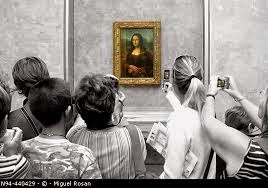
Our solution? The world's first Museum-Camera@. No, not a Camera Museum
A camera museum, not the Museum-Camera@
(represented in this photo by our clueless graphics staff), but an actual art museum which is, itself, a camera.  

The walls of the museum will be essentially one enormous camera and the very act of your looking at an object will trip a shutter which takes a photo that is automatically downloaded to your phone. 

There will only be a small charge per photo and for an additional fee, we will send smarty-pants, art critic-worthy tweets and post your photos on Facebook, Tumbler or on the cyber-photo site that we plan to build ourselves: The Photographic Museum of the Museum-Camera@. 

At last, you will be able to move through a museum at lightning speed, knowing that you have effortlessly accomplished your primary goal: to document your visit. So, when you get home and are surrounded by friends and loved ones, you'll be able to say "I was there!" and enjoy the beautiful art work from the comfort of your home entertainment center.

Or, as we like to say at The Institute, "A picture is worth a thousand visits!"


Friday, May 9, 2014

They Say It's Spring

A much-delayed spring has cautiously crept into Boston. The Duplex playlist of 5.8.14 celebrates that. Download it, put it on your MP3 player and enjoy a walk through the Arboretum.  

Listen here.

Playlist:


Blossom Dearie "They Say It's Spring" from "Verve Jazz Masters 51" (1957), Verve 
Red Nichols & His Five Pennies "Rose Of Washington Square"  (1929), Brunswick 
Charles Lloyd "Forest Flower" from "Live at Monterey" (1967), Atlantic 
Howard McGhee "BLue Bell" from "Nobody Knows You When You're Down and Out" (1962), Blue Note 
Nat King Cole "Blue Gardenia" from "Ballads of the Day" (Jazz, 1956), Capital 
Bird and Diz "Bloomdido" from "Bird and Diz" (1950), Verve 
Tom Harrell "Song Flower" from "Stories" (Jazz, 1988), Contemporary 
Ella Fitzgerald "Honeysuckle Rose" (1970), MGM 
Gary Burton "Fleurette Africain" from "Lofty Fake Anagram" (1967), RCA Victor 
Cannonball Adderly "Rose Room" from "Cannonball" (1955), Emarcy 
Zoot Sims "Passion Flower" from "Zoot Sims Plays Ellington" (1980), Pablo 

Bill Evans "Days of Wine and Roses" from "Affinity" (1979), Warner Bros. 

Saturday, May 3, 2014

The Greatest Pianist of All Time Contest

The "Who's the Greatest Drummer of All Time contest" at COS lists no African-American drummers. Not wanting to be outmaneuvered in the impending Greatest {  } of All Time-lists-battle, the Institute hereby presents:"Who's The Greatest Pianist of All Time?" The nominees are:

Peter Nero
Victor Borge
Neil Sedaka
Zez Confrey
Jim Brickman
Peter Duchin
Billy Joel
Elton John
Barry Manilow
Liberace

Remember: your vote doesn't count.

Friday, May 2, 2014

"God's Trombones" and S'more Phil WIlson

Carl Fontana
Phil Wilson

A massive stellar ensemble, featuring trombonists Carl Fontana and Phil Wilson, performs on this extended composition "God's Trombones," last heard during Boston Sackbut Week 40 years ago. Listen to this edition of The Duplex, which aired on WZBC on May 1, 2014 and my co-host for this show Dick Vacca and I will fill you in on the details.


Playlist:

Carl Fontana w. Berklee Jazz Trombone Ensemble and Thursday Night Dues Band, "God's Trombones" (Jazz, 1974) 

Phil Wilson, "Flight of the Sackbut" (Jazz, 1974) 

Phil Wilson and the NDR Big Band, "Over the Rainbow" from "The Wizard of Oz Suite" (Jazz, 1993) on Capri 

Phil Wilson, Makoto Ozone, Chris Rathbun, Terri Lyne Carrington, "What Is This Thing Called Love" (Jazz, 1983), Radio Broadcast 

Woody Herman Orchestra, "It's a Lonesome Old Town" from "Woody Herman 1963" (Jazz, 1963) on Philips 

Phil Wilson, "In a Sentimental Mood" from "Getting It All Together" (Jazz, 1977) on Outrageous Records 

Wednesday, April 30, 2014

Donald Sterling and Civil Liberty (non-jazz)

It's hard to argue with the exile of the execrable L.A. Clippers basketball owner Donald Sterling. The famous taped conversation apparently represents just another episode in a foul ongoing racist pattern. But I really wish he wasn't quite the jerk that he is, because his case gives the push-back against the loss of civil liberties a bad name.

We're in an era where privacy is undergoing a full frontal attack. Between public cameras, internet surveillance and NSA snooping, there just doesn't seem any limit to what people think they're entitled to know about us. Although I know the Sterling case is not "formal," as when government or media is involved, the idea that we have the right to know if our conversations are being recorded is being eroded, as is the premise that if you're told they're not being recorded, what you say in private won't be used to publicly hang you. The story of Sterling's loathsome behavior and subsequent punishment has the effect of, if not justifying, at least affirming the ongoing impingement on our right to privacy.  


Do we really have to begin to guard all our private thoughts in a diary that is kept under lock and key? Do we have to sweep the room for bugging devices before we conduct intimate conversations? It creeps me out any time someone's private conversations are used to publicly hang them. I can't help thinking that someone at some time could have used what I said in my home to punish me; not racist rants, but I've had jobs and bosses that I complained about in language that could no doubt have been used against me. And god knows I've said things about the government that would probably get my butt in trouble. 

So, go ahead and hang Sterling, but please don't throw the baby out with the dirty bathwater.

Monday, April 28, 2014

Fud Livingston Radio Show


Joseph Anthony (Fud) Livingston (April 10, 1906 - March 25, 1957), Charleston, S.C. was a clarinetist, saxophonist, composer and arranger whose hey day was the 20's and early 30's. Listening to his arrangements from 1926-1930 was an eye opener to me. Fud uses a variety of musical devices from the jazz world and the "modernist" school of composition, resulting in arrangements that are stylistic anomalies. There were elements that were adapted into the classic "swing" big band style or were transmuted into the more bombastic "concerto for trumpet/clarinet" approach that we see in the late 1930's, However, the form itself, with its rapid juxtaposition between earthy blues/jazz and expanded harmonic conceits, largely disappeared. 

Playlist:

Ben Pollack and His Californians "Red Hot"(1924) on Victor 

Ben Pollack and His Californians "'Deed I Do"(1926)  on Victor 

Ben Pollack and His Californians "He's the Last Word" (1926) on Victor 

The Charleson Chasers "Feelin No Pain" (1927) on Columbia 

Miff Mole and His Little Molers "Imagination" (1927) on Okeh 

Frankie Trumbauer and his Orchestra "Humpty Dumpty" (1927) on Okeh 

The Devonshire Restaurant Dance Band "Sax Appeal" (1927) on Zonophone 

All Star Orchestra "Alexander's Ragtime Band" (1927) on Victor 

Nat Shilkret And His Orchestra "Oh Baby"(1928) on Okeh 

Leonard Hayton’s Blue Four "Old Fashioned Girl (In A Gingham Gown)" (1928) on Vocalion 

Joe Venuti and His New Yorkers "Doin' Things"(1928) on Okeh 

Fred Elizalde and His Music "Singapore Sorrows" (1929) on Parlophone 

Paul Whiteman and His Orchestra "Choo Choo"(1930) on Columbia 

Bing Crosby "I'm Through With Love"(1931) on Brunswick 

Lily Pons "The Blues Danube" (1936) on RKO 

Fud Livingston "Moo" (1932) on Arc 

Monday, April 21, 2014

The "Classical Tinge" in Jazz


Jelly Roll Morton famously cited the "Spanish Tinge," but jazz has also been influenced by "classical" music. I'm calling this the "Classical Tinge." This began well before the term "Third Stream" was coined by Gunther Schuller in the 1950's. In fact, as soon as jazz-influenced dance bands (or dance-influenced jazz bands) began to record, we began to hear this happen. I hope you enjoy this look at some of tunes from 1920-1931 that had a Classical Tinge.

Listen Here.

Playlist:

 Paul Whiteman Orchestra "The Japanese Sandman" (Jazz, 1920) on Victor 
 Paul Whiteman Orchestra "Thais" (Jazz, 1924) on Victor 
 Hitchs Happy Harmonists "Boneyard Shuffle" (Jazz, 1925) on Gennett 
 Ross Gorman And His Earl Carroll Orchestra "Rhythm of the Day"  (Jazz, 1925) on Columbia 
 Bix Beiderbecke  "Humpty Dumpty"  (Jazz, 1927) on Parlophone 
 Fletcher Henderson "Whiteman Stomp" (Jazz, 1927) on Columbia 
 Bix Beiderbecke "In a Mist"  (Jazz, 1927) on Okeh 
 Romain Baud "Flashes (By Bix)" Jazz, 2011) 
 Red Nicholls & His Five Pennies "Davenport Blues" (Jazz, 1927) on Victor 
 Carl Fenton's Orchestra "Delirium" (Jazz, 1927) on Brunswick 
 Carroll Dickerson and His Orchestra "Symphonic Raps" (Jazz, 1928) on Odeon 
 Red Nichols "Imagination" (Jazz, 1928) on Brunswick 
 Frankie Trumbauer And His Orchestra "Jubilee"(Jazz, 1928) on Parlophone 
 Paul Whiteman and His Orch "San" (Jazz, 1928) on Victor 
 Fletcher Henderson and His Orchestra "My Gal Sal"  (Jazz, 1931) on Columbia 
 Red Nichols & His Five Pennies  "That's No Bargain" (Jazz, 1926) on Brunswick 


Friday, April 11, 2014

The Colbert Report


So, Stephen Colbert is taking over for David Letterman. Colbert is a fine actor, comedian, interviewer-even a good song and dance man, I'm told. And it's those talents that will be on display as star of "Late Night." His choice as successor to Letterman does not portend tectonic changes at media megalith CBS, which airs the program. His slyly transgressive persona will be persona non grata.
Can anyone believe that CBS will adapt it's basic economic structure to accommodate Colbert's shtick as a left-liberal masquerading as a right wing wingnut? Will they happily sacrifice a broad swath of their demographic, as the good natured political ribbing that has dominated the show-with resounding financial success-goes right in the dumper and the character Colbert played on Comedy Central is given free range to acerbically dissect the foibles of the American power structure? Rather than the usual fawning treatment, will the cavalcade of Hollywood guests (whose movies are produced and distributed by the same company that owns CBS) now be in for the kind of ironic diss served up on the Colbert Report?
Sure, it could happen. If the sponsors of the Late Show decide they'll be happy to pay the same rates for a smaller and smaller but hipper and hipper audience. I'd be surprised. More likely, they will shave down Colbert's canines and reduce his bitter irony to a wholesome pap. Not too quickly, though. No doubt the network, the sponsors and producers will devise a strategy to woo Colbert's old viewers while reassuring the mainstream audience by slowly mutating Colbert from his current complex persona into something with the ring of the renegade, as has been perfected by the ad industry to sell jeans.  


Colbert might change the multi-billion dollar culture of late night TV; and Chris Christie might get a job as a tolltaker on the George Washington bridge, but I'm afraid my money's on Proctor and Gamble, Mercedez Benz and Sheldon Adelstein. There's just too much money at stake. Meanwhile, good luck, Colbert, we love you, er we love your persona, we think we love you, but we hope that what we love is really you [voice trails off to infinite recursion]...

Saturday, April 5, 2014

Boston Piano Players

Jaki Byard

On the April 3, 2014 edition of the Duplex Mystery Hour on WZBC, guest Dick Vacca, author of the Boston Jazz Chronicles and I take a look at some piano players with a Boston connection.

Listen to the show.

Playlist:

Sid Reinherz "The Boston Trot" 1923 on Gennett 
Jaki Byard "Spanish Tinge No 1" 1989 on Candid 
Sabby Lewis Orch "Boston Bounce" 1946 on Continental 
Dave McKenna "You Stepped Out of a Dream" 1991 on Concord Jazz 
Ran Blake and Sera Serpa "When Sunny Get Blue" 2010 on Inner Circle 
Joanne Brackeen "Dr. Chu Chow" 1990 on Concord Jazz 
Nat Pierce Septet "Gale Boogie" 1949 on Crystal-Tone 
James Williams "Love Letters" 1987 on Emarcy 
Dominique Eade and Jed Wilson "Never Let Me Go" 2006 on Jazz Project 
Dick Twardzik "A Crutch for the Crab" 1955 on Pacific Jazz 
Chick Corea "Pannonica" 2002 on Blue Note 
Ray Santisi "Pendulums"  2005) on Rasan 

Friday, March 28, 2014

Get Miff-Ed

Miff Mole was a leading light of early jazz trombone. He played with everyone-check out the playlist-and his playing always shone.

Listen to the show.

Playlist:

Lanin's Southern Serenaders. "Aunt Hagar's Children's Blues  (1921), Paramount
Lanin's Southern Serenaders. "Shake It Break It" (1921), Paramount
Original Memphis Five "I Wish I Could Shimmy Like Sister Kate" (1922), Perfect 
Original Memphis Five "Tin Roof Blues" 1923), Perfect 
Ray Miller and His Orchestra "Mama's Gone" (1924), Brunswick 
Bix & Sioux City Six "I'm Glad"  (Jazz, 1924), Gennett 
The Red Heads "Nervous Charlie" (Jazz, 1925), Pathe 
The Cottonpickers "Prince of Wails"  (Jazz, 1925), Brunswick 
Ray Miller and His Orchestra "Nobody Knows What a Red Headed Mama Can Do" (Jazz, 1924), Brunswick 
The Tennessee Tooters "How Come You Do Me Like You Do?" (Jazz, 1925), Vocalion 
Bix Beiderbecke & Sioux City Six "Flock O' Blues" (Jazz, 1925), Gennett 
Red And Miff's Stompers "Alabama Stomp" (Jazz, 1926), Edison 
Red And Miff's Stompers "The Stampede" (Jazz, 1926), Edison 
Red Nichols & His Five Pennies "That's No Bargain" (Jazz, 1926), Vocalion 
The Arkansas Travelers "Sensation" (Jazz, 1927), Harmony 
Miff Mole and his Little Molars "I Ain't Got Nobody"(Jazz, 1927), Okeh 
The Six Hottentots "The Memphis Blues"(Jazz, 1927), Domino 


Wednesday, February 26, 2014

VIsiting the Abel Meeropol Archive

Abel Meeropol, under the pen name of Lewis Allan, was the composer of the song "Strange Fruit." I'm producing an animation about the amazing story of the song's creation and its linkage to Billie Holliday, so it was a natural to pay a visit to the Howard Gottlieb Archival Center at Boston University, where his papers are stored. 

An internet search will easily get you biographical details of Meeropol's life, but in this post, my aim is to give you a sense of how these documents brought me closer to the person.


Read and see more.

Friday, February 21, 2014

The Edge of Schmaltz

Schmaltz-easy to say, but how do we really define it? Where does it lay along the slippery border between cheese, camp, marginal taste, pathos, bathos and emotional catharsis?  Is the very use of the word cringe-inducing? Not to me. One era's hip is often another era's schmaltz. Sometimes there's great musicianship involved. Is that enough to rescue the song or not? Sometimes the musicians are amateurish, but through sheer dint of sincerely, a hoary tune or corny lyric works. In one mood, a song sets your teeth on edge and in another mood, you reach for the handkerchief. 

Some of the folks in this playlist will be no surprise, some may bemuse and some annoy, but that's my job. 

Here's The Show.

Blue Stars "Hernando´s Hideaway" from "Jazz in Paris" (1955) on Barclay 
Ziggy Elman and His Orchestra "With a Song in My Heart" from "Dancing With Zig" (1950) on MGM 
Sarah Vaughn "Jim" from "w. Clifford Brown" (Jazz, 1954) on EmArcy  
Andre Previn "Mad About The Boy" from "Previn at the Piano" (1958) on RCA 
Cannonball Adderly "Shake a Lady" from "Domination" (1965) on Capital 
Chet Baker "Time After Time" from "Time After Time" (2002) on GFS 
Sam The Man Taylor "Tara's Theme" from "Blue Mist" (1955) on MGM 
Johnny Hartman "I Let a Song Go Out of My Heart" from "Sings" (1947) on Savoy 
Lena Horne "Beale St Blues" from "Swinging Lena Horne" (1962) on Coronet 
Matt Dennis "A Trout No Doubt" from "Saturday Date" (1957) on Tops 
Errol Garner "April In Paris" from "Concert By the Sea" (1956) on Philips 
Frank Sinatra "Autumn in New York" from "That Old Feeling" (1956) on Columbia 
Earl Hines "Why Must We Part" from ". . . And His Orchestra" (1933) on Jazz Archives 
Esperanza Spaulding "Precious" from "Esperanza Spaulding" (2008) on Heads Up 
Freddie Hubbard "I Got It Bad (And That ain't Good)" from "The Body and The Soul" (1963) on Impulse 
Bobby Hackett "Stairway to The Stars" from "Dream Awhile" (1961) on Columbia 


Friday, February 7, 2014

Jazz and Poetry Show

Poets like Pound, Cummings and Eliot began experimenting with form, rhythm and meter in the 1920's. At the same time, poetic practitioners in the Harlem Renaissance opened up to the influence of jazz. Weary Blues, written by Langston Hughes in 1925 was both an imitation of the music and a description of the environment where one watched and listened to the music. In a broad sense, it tried to bring a sense of improvisation to the poetry.

Jazz and poetry hunkered down for a while but re-energized with the coming of the Beats in the 1950's, which is the era wherein most of my playlist derives. Practitioners from that era are scarce, but the tradition maintains itself. There are also later experiments, using electronics and recording techniques, a couple of examples which I include.

Here's the Show.

Here's the Playlist:
Langston Hughes "Weary Blues" 1958 
Bob Dorough "Night and Morn" from "Jazz Canto" (Jazz, 1958) on World Pacific 
Bob Dorough "Daybreak in Alabama" from "Jazz Canto" (Jazz, 1958) on World Pacific 
Jack Kerouac "Blues and Haikus" (Jazz, 1959) on EMI 
Mark Murphy "Parker's Mood" from "Bop for Kerouac" (Jazz, 1981) on muse 
Christopher Logue "Red Bird" from "Red Bird" (Jazz, 1959) on Parlophone 
Kenneth Patchen "As I Opened The WIndow" (Jazz, 1959) on Folkways 
Bob Dorough "Dog" from "Jazz Canto" (Jazz, 1958) on World Pacific 
John Carradine "Poets to Come" from "Jazz Canto" (Jazz, 1958) on World Pacific 
Ben Wright "Sullen Art" from "jazz Canto" (Jazz, 1958) on World Pacific


Ben Wright "Lament" from "jazz Canto" (Jazz, 1958) on World Pacific 
United Future Organization "Poetry And All That Jazz" from "UNITED FUTURE ORGANIZATION" (Jazz, 1993) on Talkin' Loud 

 Mark Murphy "Kool Down" from "Tenth and Parker" (Jazz, 2000) 

Friday, January 31, 2014

Music (& Influences) of David Dominique

David Dominique is on hand to talk about his music on this edition of the Duplex Mystery Hour. We listen to large ensemble music from his "Ritual" cd and also to some of the music that either inspired him or simply helps to put his work into context. 


Here's the Playlist:

David Dominique “Ritual” (David Dominique 2013)

Franco Donatoni “Lumen”  (1975)

David Dominique “Ritual 4” from Ritual (David Dominique 2013)

Charles Mingus “Duet Solo Dancers” from The Black Saint and the Sinner Lady (Impulse 1963)

Igor Stravinksy “L'histoire du Soldat” (1918)

David Dominique “Ritual 4” from Ritual (David Dominique 2013)

David Dominique “Drunk Hump”from Ritual (David Dominique 2013)

Henry Threadgil “Paille” from You Know The Number (RCA Novus 1987)

David Dominique “Golden Retriever” from Ritual (David Dominique 2013)

Prefuse 73 “Suite For The Ways Things Change” from Extinguished: Outtakes  (Warp 2003)

David Dominique “Mulatto Shuffle” from Ritual (David Dominique 2013)

Sunday, January 26, 2014

Dave Lambert-Pt. 2

Lambert at lower left

The Duplex Mystery Jazz Hour of Jan. 23 continued on to the last few years of vocalist/arranger Dave Lambert's career. The scatting that he and Hendricks do on "Airegin" is unsurpassed.

Here's the Program

Here's the Playlist:
Lambert Hendricks and Ross "Things Aint' What They Used to Be" from "Sings Ellington" (Jazz, 1960),  Columbia 
Lambert Hendricks and Ross "Midnight Indigo" from "Sings Ellington" (Jazz, 1961),  Columbia 
Dave Brubeck All Stars "Everybody's Coming" from "Real Ambassadors" (Jazz, 1961),  Columbia 
Dave Brubeck All Stars "Cultural Exchange" from "Real Ambassadors" (Jazz, 1961),  Columbia Lambert Hendricks and Ross "In A Mellotone" from "Sings Ellington" (Jazz, 1961),  Columbia 
Dave Brubeck All Stars "Swing Bells" from "Real Ambassadors" (Jazz, 1961),  Columbia 
Lambert Hendricks and Ross "Airegin (live)" (Jazz, 1961) 
Lambert, Hendricks and Bavan "Watermelon Man" from "At Newport '63" (Jazz, 1963),  RCA 
Lambert, Hendricks and Bavan "Nuthin for Nuthin" from "Havin a Ball" (Jazz, 1964),  RCA 
Lambert, Hendricks and Bavan "Deedle-Lee Deedle-Lum" from "At Newport '63" (Jazz, 1963), RCA 
Dave Lambert Singers "Think of Me"(Jazz, 1964) 
Dave Lambert Singers "Individualist Waltz" (Jazz, 1964) 
Dave Lambert Singers "Comfy Cozy" (Jazz, 1964) 
Dave Lambert "Donna Lee" (Jazz, 1965) 


Monday, January 20, 2014

Who Applied for LPFM in MA.


I thought it would be interesting to post this list of applicants for LPFM radio licenses in Massachusetts. There are a number of governmental agencies, schools, religious groups, public access corporations and community arts groups, including my former haunt Zumix in Eastie and our friends at the Zeitgeist Gallery in Lowell. There are 9 applicants in Boston.

Props to Scott Fybush.

ACTON 94.9 TOWN OF ACTON MASSACHUSETTS
AMHERST 103.1 HAMPSHIRE ARTS CON
ATHOL 105.9 ATHOL ORANGE COMMUNITY TELEVISION INC.
ATTLEBORO 101.1 ATTLEBORO ACCESS CABLE SYSTEM INC.
AUBURNDALE 102.9 LASELL COLLEGE RADIO
BELCHERTOWN 97.9 DWIGHT CHAPEL INC.
BOSTON 94.9 BOSTON HISPANIC COMMUNITY RADIO
BOSTON 94.9 RENAISSANCE CHINESE CULTURAL ASSOCIATION
BOSTON 102.9 CITY OF BOSTON
BROCKTON 96.5 MASSASOIT COMMUNITY COLLEGE
BROCKTON 96.5 RANDOLPH CHRISTIAN COMMUNITY RADIO INC.
BROCKTON 102.9 RAHAB INC.
BROOKFIELD 98.1 A.P.P.L.E. SEED INC.
CHELSEA 94.9 CHELSEA PUBLIC SCHOOLS
CHICOPEE 98.7 CHURCH OF NEW COVENANT
CHICOPEE 102.5 ST. JEROME PARISH HOLYOKE EDUCATIONAL RADIO ASSOCIATION
DORCHESTER 94.9 FAITH TABERNACLE CHURCH OF JESUS- CHRIST
DORCHESTER 102.9 GLOBAL MINISTRIES CHRISTIAN CHURCH
EAST BOSTON 94.9 ZUMIX INC.
EAST BOSTON 94.9 BOSTON PUBLIC SCHOOLS
EAST BOSTON 94.9 WINTHROP ART ASSOCIATION
EAST FALMOUTH 102.3 CAPE COD BUS FOR LIFE INC.
EASTON 96.5 EASTON COMMUNITY ACCESS TELEVISION INC.
FALL RIVER 88.1 MELISSA CLEAVES
FALL RIVER 88.1 JASON CLEAVES
FRAMINGHAM 96.5 ST. STEPHEN PARISH FRAMINGHAM EDUCATIONAL RADIO ASSOCIATION
FRANKLIN 102.9 FRANKLIN COMMUNITY CABLE ACCESS INC.
GOSHEN 103.1 HIGHLAND ARTS CLUB
HAVERHILL 98.1 PUBLIC MEDIA OF NEW ENGLAND INC.
HOLYOKE 102.5 WORD OF LIFE CHURCH OF GOD
HUDSON 96.3 THREEFOLD MINISTRY BNPL-20131115AVM
HUNTINGTON 104.7 WHAB FOR BB INC
IPSWICH 96.3 IPSWICH BAY BROADCASTING CORP.
LAWRENCE 92.1 ILUMINACION DIVINA INC
LAWRENCE 97.9 ST. PATRICK PARISH LAWRENCE EDUCATIONAL RADIO ASSOCIATION
LEOMINSTER 95.1 CITY OF LEOMINSTER
LOWELL 94.9 ZEITGEIST GALLERY INC.
LYNN 94.9 IGLESIA CHRISTIANA TORRENTE DE CEDRON
LYNN 96.5 CITY OF LYNN SCHOOL COMMITTEE
MOUNT HERMON 106.7 NORTHFIELD MOUNT HERMON SCHOOL
NANTUCKET 105.5 TOWN OF NANTUCKET POLICE DEPARTMENT
NEWBURYPORT 96.3 NEWBURYPORT COMMUNITY MEDIA CENTER
NEWBURYPORT 96.3 EVOLVEMENT MEDIA GROUP
NORTH ADAMS 107.1 NORTHERN BERKSHIRE COMMUNITY TELEVISION CORPORATION
NORTON 96.5 WHEATON COLLEGE
NORWICH HILL 99.7 HILLTOWN COMMUNITY CHURCH
OAK BLUFF 105.5 M&M COMMUNITY DEVELOPMENT INC OAK BLUFF BRANCH
QUINCY 91.3 QUINCY TELECOMMUNICATIONS CORPORATION
SALISBURY 94.9 GOOD NEIGHBOR STATION INC.
SOMERVILLE 94.9 CHRISTOPHER W MORIARTY
SPRINGFIELD 98.7 ABOVE THE RIM INC
SPRINGFIELD 101.7 CATHOLIC COMMUNICATIONS CORPORATION
SPRINGFIELD 101.7 WILFREDO HERNANDEZ
SPRINGFIELD 101.7 MEDIA PRESERVATION FOUNDATION
SPRINGFIELD 102.5 CATOLICASPRINGFIELD.COM
TEMPLETON 102.9 TEMPLETON BIBLICAL EDUCATIONAL SOCIETY INCORPORATED
VINEYARD HAVEN 105.5 MVPBS
WARREN 97.7 ST THOMAS AQUINAS SCHOOL
WEBSTER 97.9 SACRED HEART PARISH WEBSTER EDUCATIONAL RADIO ASSOCIATION
WESTFIELD 102.5 QUABOAG HILLS PUBLIC RADIO INC.
WESTHAMPTON 97.7 HILLTOWN CHRISTMAS STOCKING
WILLIAMSBURG 97.9 CITIZENS FOR A BETTER HILLTOWNS
WOBURN 94.9 WINCHESTER SCHOOL OF CHINESE CULTURE
WORCESTER 102.9 PRIDE PRODUCTIONS INC.
WORCESTER 102.9 WORCESTER STATE UNIVERSITY
WORCESTER 106.1 CHURCH OF GOD PENTECOSTAL SALVATION ROCK
WORTHINGTON 103.3 HILLTOWN COMMUNITY ARTS
YARMOUTH 103.5 CAPE COD CATHOLIC RADIO INC.