Top 50 Jazz Blog

Top 50 Jazz Blog
Showing posts with label ella fitzgerald. Show all posts

Wednesday, November 8, 2023

A.I. Reanimates the Beatles

The whole world-why restrict it-the entire universe-knows that the Beatles have released a song called Now And Then. This Frankenstinian effort was, as the YouTube P.R. says: “brought to life and worked on anew with contributions from all four Beatles.” The reconstruction entailed using AI to extract an old John Lennon vocal track and adding new musical backup.

Now And Then is probably the highest profile use of AI in popular music. It shows us that this technology can do something that couldn’t be done before: separate sounds that had already been mixed together. A machine-learning algorithm is trained to learn sonic patterns and create a neural network capable of isolating individual voices or instruments. It can then re-synthesize them to try and match samples of those instruments or voices. It took Lennon’s voice off the demo cassette tape and recreated it, giving us a sampled version of Lennon’s voice (and Harrison’s guitar).

My own view is that the song is maudlin and turgid; glib romantic tripe surrounded by white-bread music. Disclosure: I feel the same way about Let It Be, a McCartney song knee-deep in pseudo-religious semi-anthemic bathos. Worst of all, I never “got” Imagine. 

Now to something slightly more objective: the music industry is desperate. People don’t want to pay for music and for 15 years, album sales and music sales have declined. MRC Data, a music-analytics firm says that old songs represent 70 percent of the U.S. music sales. 

Record companies are plumbing their catalogues for music that can save their plunging bottom lines. But the real force in music is not record companies which are, in any case, a very small piece of very large international corporations. They are technology companies: Amazon, Google, Apple and Spotify, who own the download market. How many of these companies are out there looking for and signing new musical artists? None. It's no surprise that the music industry will use any tool it can to maximize its resources, especially if this tool simultaneously minimizes expenses.

I’ve read through a number of websites from in and outside the music industry. They acknowledge the drawbacks of AI (in a word: it’s not human), but overwhelmingly embrace the use of the technology. Here are some extracts to give a sense of what I mean.

As one website puts it: “AI can help with tasks such as music recommendation, content curation, and even music composition. By leveraging AI as a tool, the music industry can be at the forefront of the next wave of innovation.”

Another site says: “One of the most significant benefits of AI in music production is the ability to quickly generate new ideas and variations.”

A trope widely used is this: “It has democratized music production, making it accessible to those who may not have traditional musical training or expensive equipment.”

Another website states this “Con”: Because many people see music as such an innately human expression, it is often considered as too precious to impart onto technology. The thought of a computer generating a ‘random’ piece of music that hasn’t been painstakingly created by an artist is almost seen as sacrilegious.” However, a few paragraphs later, we read this: “Instead of shying away from the idea of this Black Mirror-esque future, the best approach to take is one of optimism and curiosity. While there are always bound to be diehard old school musicians who refuse to use tech, as there are readers who still refuse the Kindle, music producers should consider AI as something to be embraced.”

Another acknowledges this issue: “Moreover, while AI can generate music based on patterns and trends, it lacks the ability to understand cultural context and emotional nuance. Music is not just about melody and rhythm; it’s a form of expression that reflects the human experience. AI, as advanced as it may be, cannot replicate this aspect of music creation.”

It seems as though consumers of music are being asked to choose between an archaic “humanistic” attitude that rejects AI, or a “realistic” one which accepts, even appreciates it and, as the technology gets better and better, will narrow the gap between human and machine-made creation to indistinguishability. People will take sides on this and will impute moral and ethical judgements to buttress their positions.

It would be ridiculous to say the aesthetic application of AI falls into the life-or-death category of debates surrounding technologies like cloning, gene splicing or nanotechnology. Some of the debate is morally murkier, but some applications are obviously abhorrent. For example, as used in the streaming cesspool, to avoid having to pay money to flesh and blood musicians.

I love the Beatles. They were a force; born and fostered in an era when a group might make it past a second album that didn’t sell that well. In my youth, “Rubber Soul,” and ”Revolver” competed for turntable time with Miles, Getz and Coltrane. Now, rather than a generative force, they are a symptom of a systemic breakdown. The whole business is reminiscent of the holographic resurrection of dead musicians.

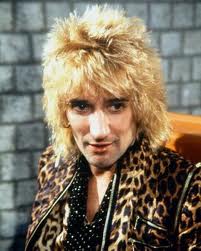
 It's only a matter of time before the Beatles get the Rod Stewart and Ella Fitzgerald treatment, which gives new meaning to the expression “half-dead.” Yes, pairing Rod and Ella is like putting Twinkie creme filling into a Godiva chocolate; like putting Donald Trump's hair on Sophia Loren's head. It shouldn't be conceived of. It shouldn't be done. But it has been, and it will.

Can anything be done? Those few musicians with real power might exert that power to force streaming companies to pay a fair share to artists. We might all demand those changes. We might also take note that the enemy is us and pony up for recorded music the same way we shell out for HBO, to see a movie, a show or a dance concert.

Monday, April 10, 2017

Coaxing Spring

Why not take credit?  This show was meant to bring Spring out of its hibernation and the day after the broadcast, the weather took a decided turn for the better. Must be living right; or maybe it was the music.
LISTEN HERE

PLAYLIST

Sarah Vaughan "Spring Will Be A Little Late This Year" 1953 on Columbia

Charlie Parker "April In Paris" from "Bird With Strings" 1950 on Verve
 

Blossom Dearie "They Say It s Spring" from "Jazz Masters 51"1956 on Verve

The Dave Pell Octet "Spring Is Here" from "Plays Rogers and Hart" 1954 on Pacific Jazz

Ella Fitzgerald "Spring is Here" from "Ella Fitzgerald Sings the Rodgers and Hart Songbook, Vol. 2" 1956 on Verve
 

Clifford Brown & Max Roach "Joy Spring" from "Clifford Brown & Max Roach" 1954 on Emarcy
 

Tony Bennett and Bill Evans "You Must Believe In Spring" from "Together Again" 1976 on Columbia
 

Dave Brubeck "Spring In Central Park" from "Jazz Impressions of New York" 1964 on Columbia


Chick Webb & Ella Fitzgerald "I Got The Spring Fever Blues" 1936 on Decca
 

Bob Dorough "Spring Can Really Hang You Up The Most" from "RIght on My Way Home" 1997 on Blue Note
 

Freddie Hubbard "Up Jumped Spring" from "Backlash" 1966 on Atlantic
 

The Four Freshmen "Their Hearts Were Full of Spring" from "The Freshman Year" 1961 on Capital
 

Friday, December 23, 2016

Holiday Head-Spinner


Have a jazz/R&B/funk/soul/gospel trip through the holidays on the 
Duplex Mystery Jazz Hour, WZBC.ORG, 12.22.2016.
LISTEN HERE
 

PLAYLIST

Paul Bley "Santa Clause Is Comin' to Town" (1953), on Debut
 

Dave McKenna "Jingle Bells" from "Christmas Party-Holiday Piano Spiked With Swing" (1997), on Concord
 

Ray Charles "Winter Wonderland" from "Spirit of Christmas" (1956) on MGM
 

Charlie Parker "White Christmas" from "Live at Royal Roost" (1948) on Savoy
 

Charles Brown "Christmas in Heaven" from "Christmas in Heaven" (1965) on Jewel Records
 

Eyal Vilner Big Band "Sevivon" from "Hanukkah - EP" (2016) on Eyal Vilner Big Band

Joe Pass "Have Yourself A Merry Little Christmas" from "Joe Pass - Six String Santa" (1992) on LaserLight Digital ‎


Louis Armstrong "Twas the Night before Christmas" (1971) on Continental


Amos Milburn "Let's Make Christmas Merry, Baby"(1948) on Aladdin
 

Frank Sinatra "Let It Snow" from "Christmas Songs" (1948), on Columbia
 

Joseph Spence "Santa Claus is Coming to Town" from "Living On The Hallelujah Side" (1980) on Rounder
 

The Soul Saints Orchestra "Santa's Got A Bag Of Soul" (1994) on Hot Pie and Candy records
 

Charles Brown "Merry Christmas Baby" from "Cool Christmas Blues" (1984), on Bullseye Blues

Fats Domino "Jingle Bells" from "Christmas is a Special Day" (2006), on Cap
 

Otis Redding "White Christmas" (1967) on Atco
 

The Blind Boys Of Alabama "Last Month Of The Year" from "Go Tell it on the Mountain" (2008), on Real World
 

Clarence Carter "Back Door Santa"  (1968) on Atlantic

Vince Guaraldi "Christmas Time Is Here" from "A Charlie Brown Christmas" (1965) on Fantasy


Funk Machine "Soul Santa" (1973) on Creative Funk


Ella Fitzgerald "The Christmas Song" from "A Swinging Christmas" (1960) on Verve
 

John Coltrane Quartet "Greensleeves" from "Africa Brass" (1961) on Impulse
 

Chet Baker "Joy To The World" from "A Christmas Jazz Album" (1997) on Dinemec Jazz
 

Duke Pearson "Wassail Song" from "Merry Old Soul" (1965) on Blue Note
 

Wynton Marsalis "We Three Kings" from "Crescent City Christmas Card" (1989) on Columbia  

Louis Armstrong "Cool Yule" from "Louis Armstrong With The Commanders" (1953), on Decca
 

Fats Waller "Swingin' Them Jingle Bells" (1936) on Victor
 

Dianne Reeves "Christmas Waltz" from "Christmas Time is Here" (2004) on Blue Note
 

Ray Charles "Rudolph the Red-Nosed Reindeer" from "Rudolph the Red-Nosed Reindeer" (2009), on Concord

Thursday, October 6, 2016

10 Ballads (Almost) No One Sings

Most of the best ballads are covered endlessly, but somehow, a few beauties have managed to slip the noose and have not been ground into dust by endless repetition.

I realize a post like this is like a person giving away a person's favorite secret swimming hole, but I know my elite and discreet readership can keep a secret.

I have ordered them from what I think are the most to the least recorded.


The song itself is sandwiched in between very non-ballad sounds and starts about 4:00 in


Friday, October 16, 2015

AUTUMN AND BALLADS

It's fall. Linger in the splendors of maple, ash and birch. It may help you infuse winter's stark chiaroscuro with some warmth. For those who are not graced with a vista of changing foliage, I've interspersed a few samples.
Ella


Sinatra


Wednesday, August 19, 2015

10 Ballads to Slow Down Summer

I'm still cold from last winter, so the idea of rounding the corner into autumn is not thrilling. I invite you to luxuriate in these beautiful ballads. Let them keep the thought of neck-high snow at bay while they temper the burn of August heat.

Clifford Brown-I Don't Stand a Ghost of a Chance


Lawrence Brown, Ben Webster-All Too Soon


Tuesday, November 18, 2014

Songs That Deeply Move

After my recent interview with Sheila Jordan, Jeff Turton made this comment: "She sang at my wedding and I always loved "You Are My Sunshine..."[see below]. I asked if she would sing it but she told me that she wouldn't sing it because to her it was a sad song. Growing up it was always a song that they sang when there were problems in the mines and lives were lost, which happened on a regular basis back then... Since that time I have never heard the song in the same way and I now hear that sadness in her voice."

There are often universal, or at least consensual emotional responses to music. Minor and major are more than just the mechanical act of flatting the third. But, we always bring our own backstory too, sometimes conscious, sometimes not and once in a while we are blindsided by our own reaction and deeply moved by music that other people find merely "pleasant," or "well-crafted."  
Abbey Lincoln
I'm not talking about the effect of music at the transcendental end of the spectrum-Coltrane, Pharoah Sanders and others. That music summons up large vistas and profound cosmic spaces. The songs I allude to here move us to a very personal inner space and often, a deep melancholy. Sometimes we understand why this happens, as in Jeff's story above; sometimes not. The fact that we may not know why we are emotionally stirred seems to deepen the experience.

In "Dinji," from Wayne Shorter's "Super Nova" album, a very personal vocal by Maria Booker is bookended by music evoking a wider, more cosmic palette. This deepens the effect of the vocal, which enters at about 4:00.

In the LP "Clap Hands, Here Comes Charlie," comes Ella with "Good Morning Heartache," a beautiful marriage of music, lyric and musician. No surprise at its effect.

Here's "You Are My Sunshine," off the album "The Outer View." The arrangement George Russell wrote showed that he grasped the many layers of subtext in the song and Sheila Jordan's relationship to it.

Rahsaan and "A Laugh for Rory." Why this song? I'm not sure, but the combination of the real child's voice, the bubbling lightness of the head contrasted with the dramatics of the solos tripped a wire in me.

Finally, the song with a mojo that struck me like thunder is "Throw It Away," by Abbey Lincoln from "A Turtle's Dream." Why? I'll let the mystery continue to breathe.


Monday, July 7, 2014

Chill Vocals, Pt. 2

My personal response to global warming; as heard on my show, the Duplex Mystery Jazz Hour, Thursday, July 3, 2014 on WZBC, 90.3, WZBC.ORG.

Listen Here.

Playlist:

Mark Murphy "On the Red Clay" (Jazz, 1975) on muse 
Count Basie "Whirlybird" from "At Birdland" (Jazz, 1960) on Emus  
June Christy "Something Cool"(Jazz, 1953) on Blue Note 
Duke Ellington & His Orchestra "Take the A Train" (Jazz, 1952) on Columbia 
Ella Fitzgerald "My Reverie" (Jazz, 1960) on Verve 
Chet Baker "Line for Lyons" (Jazz, 1956) on World Pacific 
Jack Teagarden "Don't Tell a Man About His Woman" from "Essential Jazz Vocals" (Jazz) on Verve 
Lee Wiley & Bobby Hackett "STREET of DREAMS" (Jazz, 1950) on Columbia 
Billy Eckstein "Caravan" (Jazz, 1949) on Verve 
Bob Dorough "Something for Sydney" (Jazz, 1997) on Blue Note 
Peggy Lee "That's the Way it Goes" (Jazz, 1941) on Columbia 
Louis Armstrong "Mack the Knife" (Jazz, 1955) on Columbia 
Billie Holliday "Fine And Mellow" (Jazz, 1939) on Commodore
King Pleasure "Golden Days" (Jazz, 1960) on Prestige 
Blossom Dearie "Surrey With The Fringe On The Top" (Jazz, 1958) on Verve 
Mel Torme and the MelTones "Hit the Road to Dreamland" (Jazz, 1959) on Verve 
Joe Williams "Hey Bartender" (Jazz, 1951) on Columbia 
Ella Fitzgerald "Blues in the Night" (Jazz, 1961) on Verve 
Lambert, Hendricks and Ross "Charleston Alley" (Jazz, 1959) on Columbia 
Mose Allison "Ever Since the World Ended" Jazz, 1997) on Blue Note 
Betty Carter "Some Other Time" (Jazz, 1993) on Capital Jazz 
Kurt Elling "Those Clouds Are Heavy, You Dig?" (Jazz, 2009) on Concord 
Vanessa Rubin "Black Coffee" (Jazz, 1995) on novus 
Mark Murphy "Canteloupe Island" (Jazz, 1960) on muse 
Chris Connor "Blue Silhouette" (Jazz, 1954) on Bethlehem 
Joe Williams "Who She Do" (Jazz, 1983) on Delos 


Monday, October 29, 2012

Duets With Dead People


So glad to see that Rod Stewart and Ella Fitzgerald are finally getting together. They join a macabre crew that includes Celine Dion and Sinatra, Ol Blue Eyes and Hayley Reinhart(!), Lauren Hill and Bob Marley, Lisa-Marie and Elvis and, of course Natalie with Nat.

Since I'm always asking for too much anyway, how about a little less fame-by-association-mongering? 


Do we let the offspring-Lisa-Marie and Natalie-off the hook. Sorry. No. Trotting out your baby pictures and your less-compelling voices in public is an embarrassment, not a tribute to your dad.

And sticking copyright signs on the names of dead celebrities is no solution. It just means dealing with the copyright holder's phalanx of lawyers and not the estate's. Does anyone think that the corporation noted in my Trademarking Jazz post, CMG Worldwide, would have turned this down; even, as CMG says, to "maintain and develop a positive brand image"?

I have found previous ghoulish re-animation collaborations merely crude and unaesthetic, but to pair Rod and Ella is to sink a leaf blower engine in a Ferrari; to put Cool Whip in a Godiva chocolate; to put Donald Trump's hair on Sophia Loren's head. It shouldn't be done. It shouldn't even be conceived of.


Wednesday, March 21, 2012

Jazz Makes a Standard

Pianist Robert Glasper said, in reference to The Great American Songbook: "It's time for a new standard. We can't do the old thing forever." Given the many attempts to bring jazz into hip hop or hip hop into jazz, I then posed the question: How far can you bend a standard before it breaks?  
Sung to the tune of Melancholy Baby: "Come to me my broken metatarsal"
Jazz has always been in the business of bending tunes. In fact, it seems completely reasonable to think that the Great American Songbook would be a much smaller part of American musical culture if these now "standard" tunes had not been plucked from their original Broadway or Hollywood context by jazz performers, who dug out and actualized their rhythmic, harmonic and melodic implications.

Going back to the 1920's, there were both vocal and instrumental jazz/pop versions of tunes originally used on stage and in film. Working alone, neither sung versions or instrumental versions could have done the job, but together they showed how a tune could be transmuted into a musical entity that transcended its initial conception and performance.


To see if this process unfolded in a way that is comparable to current cross-fertilization efforts between hip hop and jazz, let's look at how the process traditionally happened, using one of the great jazz war horses: "All the Things You Are."


With music by Jerome Kern and lyrics by Oscar Hammerstein, Jr. this song originally came from a show called "Very Warm For May." The history of the relationship between this tune and jazz is long and deep and also a little perplexing. All sources say the show opened on November 17, 1939, but according to Dr. Chalfen, there were two jazz-inflected versions recorded before that date: Tommy Dorsey's on October 20, '39 and Artie Shaw's, on Oct. 26. The sheet music says the song wasn't copyrighted until 1940, so maybe someone heard it in previews in Boston or New London and rushed out arrangements before the legal profession could stick its oar in. Sheer speculation.


In any case, this is the way Kern and Hammerstein conceived it to be performed in 1939 (as produced in a later re-creation):


The song was lovely in its fashion, but completely rooted in one particular era and style: Broadway Musical-shading-toward Light Opera. Kern marked the chorus a "Burthen," and "cantabile," (singable). These are archaic and/or fancified terms, reflecting Kern's roots in 1910's musical theatre. Withal, given its sophisticated harmony, it was clearly a song worth the attention of jazz people.


As noted above, in 1939, before the show actually opened, Artie Shaw recorded it with Helen Forrest. The first part (verse) was eliminated. There is a "classy" intro (big brass chords) before the low-down-ish piano slides in. Then, Shaw's clarinet chorus is a great illustration of how jazz claims source material and makes it its own. Forrest's vocal follows Shaw's lead. 


Although we're focusing on vocal transformations, we need to have an instrumental version, done in a style that would have been formative for any jazz vocalist. Here's Charlie Parker, with Red Rodney, Al Haig, Tommy Potter and Roy Haynes in 1949. 


This is Ella Fitzgerald in 1963, long after the song had been enfolded by jazz into its protean bosom. The tempo is up a bit, the background is more overtly jazz-like and Ella inflects the song all the way through. Even though Ella could handle a soprano range, the key has been brought down to take the gleam off and give it a darker feeling. When she picks it up after the instrumental, she completely alters the melody, then takes it home.


Through the years, various jazzmen wrote new melodies for the song's chord changes, including "Bird of Paradise" by Charlie Parker, "Prince Albert" by Kenny Dorham and "Boston Bernie" by Dexter Gordon. Charles Mingus retitled it "All the Things You Could Be By Now if Sigmund Freud's Wife was Your Mother." 

Addendum: Who first came up with what became the classic jazz intro for "All the Things You Are?" It's completely unlike the Kern verse. I'm thinking that Dizzy wrote it, but would love to hear from anyone who can spec this out. Thanks, Steve.