Top 50 Jazz Blog

Top 50 Jazz Blog
Showing posts with label Dizzy Gillespie. Show all posts

Saturday, December 23, 2017

Chet Baker Vocals: A New Emotional Space


There were a lot of transitions and innovations in pop and jazz singing during the 1950's. Some of these were triggered by technology-tape recording/editing, hi fi, stereo, new microphones and the long playing record (LP). Other transitions reflected innovations in arranging and instrumentation and the movement of "race music" into the mainstream via rock and roll. Leaving aside innovators in blues, R&B and rock and roll, there were two musicians who effected changes in vocal jazz and pop: Frank Sinatra and yes, Chet Baker.

Frank Sinatra and his arrangers Billy May and Nelson Riddle in "In the Wee Small Hours" (1955) and "Songs for Swingin' Lovers!" (1956) bridged a popular music gap and showed that songs could swing and still deliver an intimate romantic message. 

Chet Baker's style of singing on "Chet Baker Sings" (1954) finished off what Bing Crosby started. Crosby had initiated the movement from "hot" to "cool," as he taught singers how to use the microphone. But, even though Bing's style was relatively laid back, he still used "hot" techniques like vibrato, slurs and small ornamentations to "sell" the tune. This continued to be the standard, but Baker took it a step further, either eliminating or dramatically taking down the heat of these techniques. Also, in the range and timbre of his voice, he did not sound as a man singing was supposed to. Given the negative response by fellow musicians, friends and critics, it took some guts for Baker to continue to sing.
Louis Prima
Baker was one in a long line of trumpet players who sang. Louis Armstrong, Jabbo Smith, Roy Eldridge, Bunny Berigan, Louis Prima, Hot Lips Page and Dizzy Gillespie all sang well. They thought of themselves as entertainers, liked to sing and were happy to give their chops a break. Berigan's style was lighter, but even after he had a hit with "I Can't Get Started," he almost always deferred to a band singer and just played. The rest of those guys sang with a ballsier approach, sometimes ironic or sly, often bluesy. Armstrong always sang romantic tunes, but I hear an artfulness that separates the singer from the object of his affection and the song itself becomes the object. He did sing with great tenderness in the last phase of his career. Baker's singing was the first in this lineage that said out loud: "This is what it means to be vulnerable." 

Baker's trumpet playing was not unique. It was distinguishable from but similar to the playing of others active at that time, like Jack Sheldon, Don Fagerquist, Don Joseph, Tony Fruscella and John Eardley. Of these, only Jack Sheldon also sang. His voice was better than Baker's, but his singing style ranged from cooing drollness to belting. To Sheldon, romantic meant sexy, while Chet was never so indiscreet, or overt. His sexiness was hidden below layers of romanticism and self-protection. 
Jimmy Scott

Rhythmically and in note choice, Baker's singing paralleled his playing. But the fragility, tremulousness and high tenor range of his voice amplified the vulnerable quality of the music. The only voice like it belonged to (Little) Jimmy Scott, who had a hit in 1950 with Lionel Hampton's "Everybody's Somebody's Fool" and who showed up in the same year with Charlie Parker, singing "Embraceable You," but Scott sang with all of the heat that Baker eschewed.

Reading about Baker's foray into singing is like wading into a critical abattoir. Almost no one liked it-musicians, friends or critics. 

There are conflicting stories about how Baker's vocals got recorded. Some say he demanded it and that owner of the Pacific jazz label Dick Bock balked. Others say that Bock wanted it and Baker resisted. Either way, it seems to be true that Baker's inexperience(or ineptitude) made for innumerable retakes, marathon sessions and a lot of audio cutting and pasting. 

Two things were not subject to criticism. One was his phrasing, which rhythmically paralleled his playing. The second was his scatting note choice, which reflected the melodic gift he shows in his trumpet solos.

There was a lot of criticism about his singing out of tune. I'm pretty sensitive to people staying in tune and I don't hear the problem very much, except on some held notes-the hardest to sing in tune and beyond his vocal support system.

Critics blasted his lack of affect, saying his singing lacked emotional weight. Much was made about the girlish, non-masculine quality of his voice. Often this critique was accompanied by an analysis of Baker's life choices-drug use and callousness toward women. People want the artist's life to reflect directly the qualities they find in the art and positive and negative projections about Baker were off the charts. He was worshipped and reviled. Some thought he sang (and looked) like an angel. Others saw him nod out or act like a cad and heard that in the music. 

What I think made critics most uncomfortable is that Baker didn't sing like a man. I've heard people ask, when they heard Baker sing, whether that was a man or a woman. One can only imagine how many such comments were passed in the day. For most of its history, jazz has been a macho culture. Sexual ambiguity or gay-ness were subjects of derision. Chet was heterosexual, but for him to sing the way he did was almost to "come out." Of course, Baker wasn't consciously making a political-sexual point. When he responded to interviewers who challenged his masculinity, he made certain to reaffirm that he liked girls, not "fellers."

Moving from being just a trumpet player to becoming a jazz vocalist/leading man, seeing the response it got from critics and especially from fellow musicians, cannot have been easy. Baker may or may not have been using heavy drugs before "Chet Baker Sings," but there's no doubt that he became more deeply enmeshed in heroin and speed during this period. It's not a big stretch to think that drugs and the incredibly strong response by women to his singing helped Baker weather the brickbats and continue to sing. 

It's appropriate that his most famous vocal tune is "My Funny Valentine." In this Rodgers and Hart tune, we have a psychic match between performer and song. This is a song that spells out the imperfections of the lover ("is your figure less than greek, is your mouth a little weak, when you open it to speak are you smart"). Look at the title itself-my "funny" valentine; not that the lover is funny/humorous, but funny as in-how did this happen-how did I end up with someone like you. This is love as mystery, song as mystery, sung by a musician whose life was lived publicly, but who was a mystery. Yes, we know the biographical facts of Baker's life, but the inner life was shrouded in layers of romanticism and self-protection.
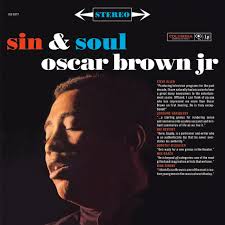
It's difficult to show the influence Baker had, as he didn't overtly inspire a generation of male singers. Most tenor-range jazz vocalists remained more beholden to older approaches. Jimmy Scott, Tony Bennett, Johnny Mathis, Mose Allison, Oscar Brown, Jr., Mark Murphy, Jackie Paris and Sammy Davis, Jr. were all much "hotter" singers. 

But I contend that Chet Baker changed the "field" and in so doing influenced these singers. He brought the ethos of cool to a kind of climax by moving into territory that had once belonged only to female vocalists and opened up the emotional space to show vulnerability; a space that male singers had previously shied away from and which they were now more likely to inhabit. 

Ironic that Chet Baker, who created such distance between himself from others was able to transmute this distance into a kind of intimacy that had rarely, if ever, been expressed in the pop-jazz male voice.

Monday, October 23, 2017

A Big Sid Catlett Show


The Duplex of 10.19.17 featured the work of the great drummer Sid Catlett. As the playlist shows, he could play in any jazz style and make it work. He was also a master showman with the sticks. To see him in action, go here:  Enjoy the show.

LISTEN HERE


PLAYLIST

Benny Carter - "Swing It" Benny Carter, vocal, as, ‪Buster Bailey (cl as) Omer Simeon (as) Elmer Williams Chu Berry (ts cl) Horace Henderson (p) Bob Lessey (g) Israel Crosby(b) Sidney Catlett (d)‬, Columbia 1933

Fletcher Henderson - "Jangled Nerves" Dick Vance Joe Thomas Roy Eldridge (tp) Fernando Arbello Ed Cuffee (tb) Buster Bailey (cl as) OmerSimeon (as) Elmer Williams Chu Berry (ts cl) Horace Henderson (p) Bob Lessey (g) Israel Crosby(b) Sidney Catlett (d) Victor 1936

New Orleans Feetwarmers and Sidney Bechet "Shake it and Break It" S. Bechet (ss), S. de Paris (tp), S. Williams (tb), C. Jackson (p), B. Addis (g), W. Braud (b), S. Catlett (d) 1940 on VIctor

John Kirby Sextet "Jumping in the Pump Room" Charlie Shavers,cl:Buster Baily,as:Russel Procope,p:Billy Kyle, b:John Kirby,big sid catlett-d 1940 on Okeh, 1940

Benny Goodman "Pound Ridge"-Benny Goodman, cl, dir: Billy Butterfield, Jimmy Maxwell, Cootie Williams, Al Davis, t / Lou McGarity, Cutty Cutshall, tb / Skippy Martin, as, a / Clint Neagley, as / Vido Musso, George Berg, ts / Charles "Chuck" Gentry, bar / Mel Powell, p, a / Tom Morgan, g / John Simmons, sb / Sid Catlett, Chicago, 1941.

Eddie Condon w. Lee Wiley "Down With Love" from The Town Hall Concerts Forty-Four and Forty-Five-Eugene Schroeder-p· Sid Weiss-b· Sid Catlett-d· Lee Wileyv· Billy Butterfield-tp Eddie Condon -guitar, Monmouth Evergreen1944

Teddy WIlson Sextet "Don't be that way" The Onyx Club Original Live Recordings 1944, Teddy Wilson (piano), Edmond Hall (clarinet), Emmett Berry (trumpet), Benny Morton (trombone), Slam Stewart (bass), Sidney Catlett (drums) 1944 on Columbia

Esquire All Stars jazz concert "Rose Room," Art Tatum - piano, Big Sid Catlett-drums, Oscar Pettiford - bass, Barney Bigard - clarinet,  Christy Records 1945

Big Sid Catlett's Band, "Love For Scale" -Joe Guy (tp), Bull Moose Jackson (as), Bumps Myers and Illinois Jacquet (ts), Horace Henderson (p), Al Casey (g) and John Simmons (b). Capital 1945 

Big Sid Catlett and His AllStars "Humoresque Boogie"- Catlett, Eddie "Lockjaw" Davis (ts), Bill Gooden (org,celeste,vcl), Pete Johnson (p), Jimmy Shirley (g) and Gene Ramey (b). Manor 1946 

Dizzy Gillespie with Charlie Parker, "Salt Peanuts," Sidney 'Big Sid' Catlett, Al Haig, and Curly Russell. 1945 Guild

John Kirby Sextet Musicomania-Charlie Shavers - trumpet, Buster Bailey - clarinet, Charlie Holmes - alto saxophone Billy Kyle - piano, John Kirby - bass, film-Sepia Cinderella, 1947

JATP "Sid Flips His Lid," Sid Catlett, d., Charlie Shavers, tpt, Hank jones, P, Verve 1947

Monday, June 26, 2017

George Russell on the DuPlex

The DuPlex Mystery Jazz Hour took a look at the work of this important composer/arranger/pianist on 6.22.17. Russell should be given his due as an important formulator of the modal concept in jazz,   adopted by so many musicians in the 50's and 60's. He was also a very early adopter of electronic instruments and synthesizer in jazz.

LISTEN HERE

PLAYLIST

Dizzy Gillespie and His Orchestra with Chano Pozo "Cubana Be Cumana Bop" 1947 on RCA Victor

Buddy DeFranco "A Bird in Igor's Yard" 1949 on Capital-Buddy DeFranco (clarinet), Al Cohn (tenor sax), Gene DiNovi (piano), Bernie Glow, Paul Cohen, Jimmy Pupa, Jack Eagle (trumpets), Ollie Wilson, Earl Swope, Bart Varsalona (trombones), Lee Konitz, Frank Socolow (alto saxes), Gerry Sanfino (tenor sax), Serge Chaloff (baritone sax), Oscar Pettiford (bass), Irv Kluger (drums), possibly Jimmy Raney (guitar). Composed by George Russell.

Artie Shaw & His Orchestra "Similau"  1950

George Russell Sextet "Concerto for Billy the Kid" from "The Jazz Workshop" 1956 on RCA Victor-Art Farmer (trumpet), Hal McKusick (alto), Bill Evans (piano), Barry Galbraith (guitar), Milt Hinton (bass), Paul Motian (drums), George Russell (arrange)

George Russell Sextet "Fellow Delegates" from "The Jazz Workshop" 1956 on RCA Victor Teddy Kotick -b, Osie johnson-drums

George Russell Sextet "Ezzthetic" from "The Jazz Workshop" 1956 on RCA Victor

"Manhattan" from "New York, N Y"1959  on Decca-George Russell - arranger, conductor' tpts-Art Farmer - Doc Severinson Ernie Royal Joe Wilder Joe Ferrante; tbpne Bob Brookmeyer Frank Rehak Tom Mitchell Jimmy Cleveland Hal McKusick - alto saxophones Phil Woods - tenor saxophone John Coltrane -Al Cohn Benny Golson -Sol Schlinger - baritone saxophone, bass saxophone Gene Allen - baritone saxophone Bill Evans - piano Barry Galbraith - guitar George Duvivier - bass Milt Hinton - bass Charlie Persip - drums Max Roach - drums Don Lamond - drums Al Epstein - bongos Jon Hendricks - vocals, narration

"Waltz from Outer Space" from "Jazz in the Space Age" 1960 on Decca= -George Russell: arranger, conductor;trumpet Ernie RoyalAl Kiger Marky Markowitz:tbn Frank Rehak: David Baker:Bob Brookmeyer: Jimmy Buffington: french horn Hal McKusick: alto, Dave Young: tenor, Sol Schlinger: baritone Bill Evans: piano Paul Bley: piano Barry Galbraith: guitar Howard Collins: guitar Milt Hinton: bass Don Lamond: drums Charlie Persip: drums

George Russell "The Lydiot" from "Jazz in the Space Age" 1960 on Decca

George Russell Sextet "Round Midnight" from "Ezzthetics"1961 on Riverside George Russell - piano, arranger  Don Ellis - trumpet Dave Baker - trombone Eric Dolphy - alto sax and bass clarinet Steve Swallow - bass Joe Hunt - drums

George Russell Sextet "Nardis" from "Ezzthetics" 1961 on Riverside

"The Stratus Seekers" from "The Stratus Seekers" 1962 on Riverside Stratus Seekers  -George Russell: piano, arranger, conductor Don Ellis: trumpet David Baker: trombone Paul Plummer:tenor John Pierce: alto Steve Swallow: bass Joe Hunt: drums

"Pan Daddy" from "The Stratus Seekers" 1962 on Riverside
"Othello Ballet Suite" from "Othello Ballet Suite" 1968) on Riverside- recorded November 3, 1967 at the studios of Radio Sweden in Stockholm; Alto–Arne Domnerus Drums–Jon Christensen; Swedish Radio Symphony Orchestra, Tenor– Bernt Rosengren and Jan Garbarek Trumpet – Rolf Eriksson

George Russell's Living Time Orchestra "Electronic Sonata for Souls Loved by Nature" from "Electronic Sonata for Souls Loved by Nature" 1969 on Flying Dutchman-Jan Garbarek: tenor, Manfred Schoof: tot,Terje Rypdal:  guitar, Jon Christensen: drums, Red Mitchell: bass, George Russell: piano

Lisen to the Silence- live album by George Russell originally recorded in 1971. Text Credits:"Bury My Heart at Wounded Knee" by Dee Brown, "The Mark" by Maurice Nicoll, "Duino Elegies" by Rainer Maria Rilke. George Russell-timpani, arranger Stanton Davis-tpt,Jan Garbarek - tenor sax,Terje Rypdal-electric guitar,Webster Lewis - organ, Bobo Stenson-electric piano,Bjørnar Andresen- fender bass, Arild Andersen-acoustic bass Jon Christensen -percussion, Chorus of the Conservatory of Music in Oslo, Norway George Russell "Event 1" "Event II" from "Listen to the
"Event III" from "Listen to the Silence" 1971) on Concept Records
   

Sunday, May 14, 2017

Joe Gordon and Confreres

On the 4.11.17 edition of the DuPlex Mystery Jazz Hour, WZBC, guest Dick Vacca and I took a look at the work and life of trumpeter Joe Gordon. We seeded the program with the work of some of his influences, as you will see by the discography.

LISTEN HERE

DISCOGRAPHY

Charlie Parker "Scrapple from the Apple" from "Boston 1952" on Uptown

Joe Gordon "Lady Bob" from "Joe Gordon: Early Sessions" 1954 on Fresh Sounds

Fats Navarro "Barry's Bop" from "Vol. 2 Nostalgia" 1947 on BYG

Joe Gordon & Scott LaFaro "Evening Lights" from "Joe Gordon Early Sessions" 1954 on Fresh Sounds

Roy Eldridge and Dizzy Gillespie "Trumpet Blues" from "Roy and Diz" 1954 on Verve

Horace Silver "Shoutin Out" from "Silver's Blue" 1956 on Cbs

Dizzy Gillespie Big Band "A Night in Tunisia" from "Birks Works" 1956 on Verve

Clifford Brown "Stockholm Sweetnin" from "Metronome and Vogue Masters" 1953 on Definitive

Herb Pomeroy Big Band "Feather Merchant" from "Life is a Many Splendored Gig" 1957 on Fresh Sounds

Herb Pomeroy Big Band "Less Talk" from "Life is a Many Splendored Gig" 1957 on Fresh Sounds

Lambert Hendricks and Ross "Centerpiece" from "Hottest New Group in Jazz" 1960 on Columbia

Shelly Manne and His Men "Nightingale" from "Live At the Black Hawk" 1959) on ‪Contemporary‬

Thelonius Monk "Four In One" from "T. Monk at the Black Hawk"1960 on Ojc

Kenny Dorham "The Prophet" from "Live at the Cafe Bohemia Vol2" 1956 on Blue Note

Harold Land "Don't Explain" from "West Coast Blues" 1956 on OJCCD

Joe Gordon "Non-Vienese Waltz Blues" from "Lookin' Good!" 1961 on ‪Contemporary‬

Blue Mitchell "I'll Close My Eyes"  from Blues Moods, 1960 on Riverside

Joe Gordon "Mariana" from "Lookin' Good!" 1961 on ‪Contemporary‬

Jimmy Woods "Anticipation" from "The Awakening" 1961 on ‪Contemporary‬

Tuesday, January 5, 2016

Jazz Re-Shaping Standards

Without jazz, would "standards" be standards? Fact is, jazz musicians took-and continue to take-a body of music rooted in late 19th and early 20th century musical conventions and re-conceive, rejuvenate and adapt them to changing aesthetics. 

I originally took this up in this post, showing how jazz made All The Things You Are a standard. I ran across an interesting website, www.jazzstandards.com, and I'm going to use the vast amount of data they've compiled about jazz standards to expand the concept.

According to that site, these are the top ten most recorded tunes in the jazz canon, along with the year of their composition. [Notice these are all 30's and 40's tunes. In fact, in the top 300, there are only a handful that were written after 1950-but that's another story]. To keep the length of the post down, I'll take the first five of these tunes and post the earliest recordings I can find in the original context and compare them with the earliest versions I can find in the jazz context. 

1. 1930 Body and Soul
2. 1939 All the Things You Are
3. 1935 Summertime
4. 1944 Round Midnight
5. 1935 I Can't Get Started

6. 1937 My FunnyValentine
7. 1942 Lover Man
8. 1930 What Is This Thing Called Love
9. 1933 Yesterdays
10.1946 Stella By Starlight


Body and Soul, written by Johnny Green for Gertrude Lawrence, was recorded by Helen Morgan in the same year it was written. The vocal has a rubato, recitatif quality to it, with plenty of vibrato. It fits comfortably in the stylistic parameters of the era; post-parlor music, with a bit of art song harmony and the heightened emotion of European cabaret. Morgan does the verse (the first section of the song before the chorus), which most jazz versions don't include; unfortunate, from my perspective. 


Louis Armstrong also recorded Body and Soul in 1930. Right away we have the parallel universe of jazz made manifest. The Armstrong version is clearly a dance record, with a steady swing rhythm section. He approaches the tune with some measure of emotional commitment, but he completely displaces the melody rhythmically and his rendition, both vocally and on his horn, opens onto a different world than that represented by Morgan's version.

Monday, October 27, 2014

Jazz Musician: Entertainer or Artist?

Ask improvising musicians whether they would rather have an audience sitting and listening intently or up on their feet dancing and I'd bet the majority would choose the latter. Does this make the musicians in the first case "artists" and "entertainers" in the second? No. In each scenario, they are both, but current jazz dogma might have us think otherwise: For about half a century, most conversations about jazz (including "the death of jazz") have been informed by a tacit yet overwhelming identification with the ethos of personal expression over communication; i.e, artist over entertainer.

Common wisdom is that the shift from entertainment to art in jazz took hold with the boppers. Well, Dizzy Gillespie managed to wear both hats beautifully. And, both Diz and Bird said they loved playing in Detroit, because the people danced more there than in any other city.

 In fact, Jazz oral history-not critical history-shows that musicians identified themselves as entertainers, not artists. As to what words they use to describe each other, the question is moot: "Cat can really wail," or "He don't play shit."

Music has always been a tough racket and part of the deal was understanding what the audience wanted and delivering it: costumes, dancing, jokes, knockabout, occasional schmaltz and the right tempos for dancing. And there was little stigma attached to developing a successful solo and pretty much sticking with it. Certainly, a gentleman named Armstrong thought it was ok. 

                                                                     
I'm not saying that all the fancy talk is mere critical cant. It goes without saying that great jazz musicians are worthy of the same respect accorded the best in any musical genre. 

But listen up, jazz people-in an an economic climate where support for both classical and jazz is drying up, jazz can be freer to muster more creative responses than anything that is branded as "high art," and may be burdened by all the psychic trappings and expectations and affectations that go along with that.

But to do that, we need to be aware of the biases we bring to the table. Let's embrace the glorious history of jazz as entertainment, confident in the knowledge that the musical core is so strong that the art will always take care of itself (but that the audience may need some attention). 

Friday, August 22, 2014

The Young Sassy

My personal predilection is for early to middle-period Sarah Vaughan. Her voice was golden from beginning to end, but I believe the amount of ornamentation she used later in her career sometimes overwhelmed the material itself. 

On this edition of the Duplex Mystery Jazz Hour (08/21/2014), I played only early recordings, starting with her first session in 1944 with the Eckstine band and ending in 1948, with her a cappella version of Nature Boy, which, at that time, challenged Nat Cole's version in popularity. 

Ballads dominate here. My take is that record producers wanted Sarah to crossover and thought this was the way to sell female talent (unless it was targeted to the "race" audience).

Go HERE to hear the show.

Billie Eckstine "I'll Wait and Pray" (1944) on Deluxe 
Dizzy Gillespie And His All Stars Quintet "Signing Off" (1945) on Continental 
Dizzy Gillespie And His All Stars Quintet "Interlude" (1945) on Continental 
Billy Eckstein Orchestra "No Smoke Blues" (1945) on Continental 
BIlly Eckstine and His Orch. "Don't Blame Me" (1945) on Spotlight 
Sarah Vaughan "Lover Man" (1945) on Guild 
Sarah Vaughan "What More Can A Woman Do"  (1945) on Continental 
Sarah Vaughan "I'd Rather Have A Memory Than A Dream" (1945) on Continental 
Tony Scott & his Down Beat Septet "All Too Soon" (945) on Gotham 
John Kirby and His Orchestra "Time and Again"  (1946) on Musicraft 
John Kirby and His Orchestra "I'm Scared" (1946) on Crown 
John Kirby and His Orchestra "You Go to My Head" (1945) on Crown 
John Kirby and His Orchestra "I Could Make You Love Me" (1945) on Crown 
Sarah Vaughan w. Dicky Wells' Big Seven "We're Through" (1946) on H.R.S. 
Georgie Auld and His Orchestra "A Hundred Years From Today" (1946) on Musicraft 
Sarah Vaughan w. Tadd Dameron "If You Could See Me Now" (1946) on Musicraft 
Sarah Vaughan w. Tadd Dameron "I Could Make You Love Me" (1946) on Musicraft 
Sarah Vaughan w. Tadd Dameron"My Kinda Love" (1946) on Musicraft 
Georgie Auld and His Orchestra "You're Blase"  (1946) on Musicraft 
Sarah Vaughan w. George Treadwell Orch. "I've Got a Crush on You" (1946) on Musicraft 
Sarah Vaughan w. George Treadwell Orch. "Everything I Have Is Yours" (1946) on Musicraft 
Sarah Vaughan w. George Treadwell Orch. "Body and Soul" (1946) on Musicraft 
Teddy Wilson Quintet "September Song"  (1946) on Musicraft 
Sarah Vaughan w. George Treadwell Orch. "I Cover The Waterfront" (1947) on Musicraft 
Sarah Vaughan w. George Treadwell Orch. "A Ghost of a Chance (I Don't Stand - With You)"  (1947) on Musicraft 
Sarah Vaughan w. George Treadwell Orch. "Tenderly"  (1947) on Musicraft 
Sarah Vaughan w. Ted Dale Orch. "I Can 't Get Started" (947) on MGM 
Sarah Vaughan w. Ted Dale Orch. "Love Me or Leave Me" (1947) on Musicraft 
Sarah Vaughan w. Ted Dale Orch. "I Get a Kick Out of You" (1947) on Musicraft [I didn't have much info on the Ted Dale Orchestra, so if anyone has anything interesting to say about them, please chime in].
Sarah Vaughan "What A Difference A Day Makes" (1947) on Musicraft 

Sarah Vaughan w. Earl Rodgers Choir "Nature Boy" from "Nature Boy" (Jazz, 1948) on Musicraft 

Friday, December 6, 2013

It's: The Food Show!

I was pre-empted on the day itself, but did the Thanksgiving Dinner show on Dec. 5. It was some toothsome fare, if I do say so myself. Take a look at the playlist and then listen to the show. Bon appetit!

Here's the show

Ray Charles “One Mint Julep”  (ABC 1961)

Louis Armstrong “Cornet Chop Suey” (Okeh 1926)

Mickey Katz “Herring Boats”  (Capital 1961)

Dizzy Gillespie “Salt Peanuts” (Guild 1945)

Eddie Lang “Cheese and Crackers”  (1927)

Benny Goodman, Fats Navarro “Stealin Apples”  (Capital 1948)

Howard McGhee “Turnip Blood”  (Savoy 1947)

Louis Jordan “Beans and Cornbread” S (1949)

Bessie Smith “Gimme a Pigfoot”  (Okeh 1933)

John Lee Hooker “One Bourbon, One Scotch, One Beer”
from one bourbon, one scotch, one beer MP3 (chess 1975)


Leadbelly “Grey Goose” (RCA)

Memphis Minnie “Keep On Eatin'”  (Vocalion 1938)

Louis Armstrong “Struttin With Some Barbeque” (Okeh 1927)

Morganna King “Taste Of Honey”  (Mainstream 1971)

Bob Dorough “The Coffee Song”  (Blue Note 2000)

Coleman Hawkins And His Orchestra “Fine Dinner” (1939)

Jazztet “Milano”  (ARGO 1961)